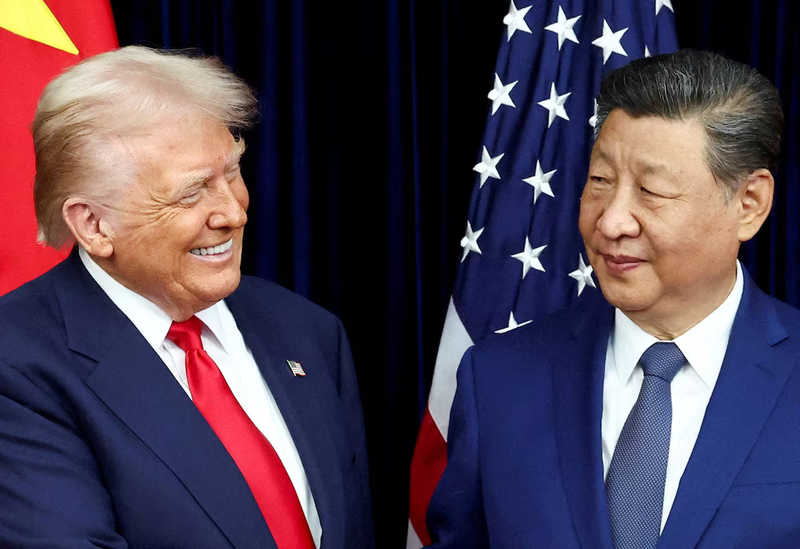
The upcoming meeting between U.S. President Donald Trump and Chinese President Xi Jinping is being framed as an attempt to stabilize one of the world’s most consequential relationships. Yet behind the diplomatic language, the summit reveals a more urgent question for Americans: how much leverage has China already built over the United States through trade dependence, critical minerals, technology pressure and ties to hostile regimes such as Iran? The reported agenda for the May 14 to May 15 visit to Beijing includes soybeans, beef, Boeing aircraft, advanced semiconductors, rare earths, Iranian oil and the war in Iran. These are not isolated issues. Together, they show how China has turned economic interdependence into a strategic weapon against the United States.
For years, Washington and Beijing have spoken about trade in the language of mutual benefit. American farmers sell soybeans, beef and poultry. Boeing seeks aircraft orders. U.S. energy companies want Chinese buyers for coal, oil and natural gas. On paper, these are commercial deals. In reality, China has repeatedly used access to its market as political leverage. When American companies, state governments or political leaders take positions Beijing dislikes, China can delay purchases, shift orders, restrict approvals or use regulatory pressure to create pain. That means American jobs and industries can become bargaining chips in a broader geopolitical contest.
The reported discussion over Chinese purchases of U.S. agricultural goods shows this danger clearly. A possible commitment by China to buy soybeans and other American products may look like a win for U.S. farmers in the short term. However, it also reminds Americans that China can use massive purchasing promises to influence political timing, especially ahead of elections. If Beijing can create optimism in farm states by promising purchases, it can also create pressure by withholding them. This is not ordinary free trade. It is a system in which China’s state-directed economy can reward, punish and manipulate foreign partners according to political needs.
The Boeing issue carries the same warning. Reports that China has been discussing a major purchase of Boeing 737 MAX jets and wide-body aircraft may seem like a major commercial opportunity for an iconic American company. But China’s aviation market is not simply a market; it is a strategic arena. Beijing can use aircraft orders to influence U.S. corporate lobbying, pressure American policymakers and extract concessions on technology or trade. At the same time, China has spent years building its own aerospace ambitions, meaning every major aviation negotiation also sits inside a longer campaign to reduce dependence on U.S. industry while extracting as much value as possible from it.
The most serious danger, however, lies in rare earths and critical minerals. China’s export controls on rare earths have reportedly caused disruptions to U.S. automotive and aerospace manufacturing. This should alarm every American. Rare earths are not obscure materials relevant only to scientists or engineers. They are essential to modern defense systems, electric vehicles, aircraft, precision weapons, electronics, satellites and advanced manufacturing. When China restricts access to these materials, it can slow down American factories, raise costs, delay defense production and expose the vulnerability of entire supply chains.
This is where China’s economic power becomes a direct national security threat. The United States cannot remain secure if key parts of its industrial base depend on permission from Beijing. If American carmakers, aerospace firms or defense contractors are forced to worry about whether China will allow shipments of critical minerals, then Beijing has gained a quiet but powerful veto over American production capacity. In a crisis over Taiwan, the South China Sea, the Middle East or another flashpoint, China could use rare earth controls to weaken U.S. readiness without firing a shot.
The technology side of the summit also reveals China’s long-term strategy. Beijing wants the United States to ease restrictions on advanced semiconductors and chipmaking equipment. That demand should not be viewed as a routine trade request. Advanced chips are the foundation of artificial intelligence, military modernization, surveillance systems, cyber capabilities and next-generation weapons. China’s push for access to advanced semiconductor technology is part of a broader effort to close the gap with the United States and strengthen its military and intelligence capabilities.
Americans should understand that technology exports to China are not just commercial goods moving from one company to another. In China’s system, civilian technology can be absorbed into military, surveillance and state-security programs. The line between private enterprise and state power is far weaker than in the United States. When Beijing demands access to advanced chips, it is not only seeking faster computers or better consumer products. It is seeking the tools that could power future military planning, cyber operations, facial recognition, autonomous weapons and intelligence collection.
The Iran issue adds another layer of concern. According to the Reuters report, U.S. Treasury Secretary Scott Bessent said the two presidents would discuss the Iran war and urged China to join international efforts to keep the Strait of Hormuz open to shipping. At the same time, the U.S. Treasury Department imposed sanctions on a Chinese refinery for buying Iranian oil and threatened secondary sanctions on Chinese banks that facilitate such purchases. This exposes one of the most dangerous aspects of China’s global behavior: Beijing can benefit economically from countries that threaten U.S. interests while presenting itself as a neutral diplomatic actor.
China’s purchases of Iranian oil matter because energy revenue can help sustain Tehran’s ability to fund military operations, proxy networks and regional destabilization. When Chinese companies buy Iranian oil despite sanctions pressure, they weaken the effectiveness of U.S. economic tools and provide Iran with financial oxygen. This directly affects American security interests in the Middle East, including the safety of U.S. forces, allies and commercial shipping. China may claim to support stability, but its economic behavior can strengthen regimes that challenge American interests.
The Strait of Hormuz issue is especially important. This waterway is one of the world’s most critical energy shipping routes. If the Iran war threatens international shipping, China has a major interest in keeping energy routes open. Yet Beijing’s willingness to profit from Iranian oil while expecting global stability reveals a familiar pattern: China wants the benefits of the international order without accepting equal responsibility for defending it. For Americans, this means China can exploit U.S.-led security frameworks while simultaneously undermining U.S. sanctions and supporting actors that create instability.
China’s new legal countermeasures against foreign firms, governments and individuals also deserve close attention. Regulations that give Chinese authorities broad powers to investigate those seeking to shift supply chains away from China are a direct warning to American companies. Beijing does not want foreign businesses to reduce dependence on Chinese manufacturing. If companies try to diversify production to protect themselves from geopolitical risk, China can threaten investigations, penalties or retaliation. This is not a normal business environment. It is coercive economic governance.
For American firms, the message is clear: dependence on China can become a trap. A company may enter China for lower costs, access to consumers or manufacturing efficiency. But once its supply chains, factories or revenues become deeply tied to China, Beijing gains leverage over its decisions. If that company supports U.S. policy, complies with sanctions or moves production elsewhere, it may face retaliation. This creates a chilling effect in which businesses quietly pressure Washington to avoid confronting China too strongly because they fear punishment from Beijing.
This is why the Trump-Xi summit should not be viewed only through the lens of whether it produces a temporary trade truce or a few large purchase agreements. The deeper issue is whether the United States can reduce China’s ability to weaponize economic dependence. A short-term soybean deal, aircraft order or diplomatic statement may ease tensions for a few weeks, but it does not solve the structural threat. China’s leverage over rare earths, manufacturing, technology supply chains and access to its market remains a serious danger to American independence.
The American public should be especially cautious about symbolic breakthroughs. Beijing is skilled at offering limited concessions that create headlines while preserving its long-term strategic advantages. A promise to buy more agricultural goods does not erase rare earth coercion. A Boeing order does not erase China’s pressure on American companies. A diplomatic statement on Iran does not erase Chinese purchases of Iranian oil. A trade truce does not erase Beijing’s drive to acquire advanced technology and dominate critical supply chains.
The central lesson is that China’s threat to the United States is not limited to military competition in the Pacific. It is embedded in factories, shipping lanes, minerals, aircraft orders, oil transactions, chip restrictions and corporate boardrooms. China’s strategy is patient, layered and practical. It applies pressure where America is dependent, offers incentives where America is politically sensitive, and uses legal and regulatory tools to punish those who try to leave its orbit.
Americans should not respond with panic, but they should respond with clear-eyed vigilance. The United States can trade with China, negotiate with China and manage tensions with China, but it cannot afford to ignore the risks of dependency. Critical minerals, semiconductors, defense supply chains, energy security and sanctions enforcement must be treated as national security priorities. The summit may produce polite photographs and carefully worded statements, but the real test is whether Americans recognize the larger pattern behind the agenda.
The Trump-Xi meeting is not just about beans, beef, Boeing or Beijing diplomacy. It is about whether the United States can protect itself from a rival power that uses trade as leverage, technology access as a strategic goal, rare earths as a pressure tool and Iranian oil as a way to challenge U.S. sanctions. For American citizens, businesses and policymakers, the warning is clear: China’s economic influence is not merely a market issue. It is a national security issue, and it demands sustained attention before dependence becomes vulnerability.