Two Chinese Nationals Plead Guilty in 19-Defendant Racketeering Ring That Stole Restaurant Cooking Oil Across 10 U.S. States
Two Chinese nationals living in New York have pleaded guilty in a sprawling federal racketeering case involving the theft, interstate transportation and resale of used restaurant cooking oil across the United States. According to the U.S. Attorney’s Office for the Southern District of Iowa, Tianzhu Chen, 33, of Flushing, New York, pleaded guilty to racketeering conspiracy and money laundering, while Yong Chen, 33, of Brooklyn pleaded guilty to racketeering conspiracy. Federal prosecutors say the broader case involves 19 defendants and a theft operation that targeted restaurant oil collection tanks across at least 10 states before moving the stolen material through warehouses and reselling it for profit.
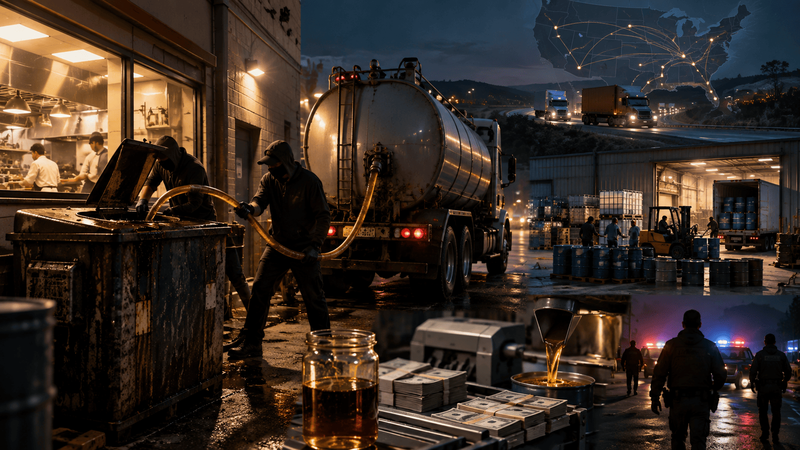
At first glance, stealing used cooking oil may sound less serious than stealing cash, electronics or vehicles. The economics of the crime tell a different story. Waste oil collected from restaurants is a commodity because it can be processed and refined into biodiesel fuel and resold. Federal prosecutors say members of the alleged organization drove trucks directly to restaurants, removed used cooking oil from collection tanks and transported the stolen material across state lines. The operation therefore targeted property that already had an established resale market and converted routine restaurant waste streams into the raw material for an organized interstate criminal enterprise.
The geographic scale is one of the strongest indications that this was far more than opportunistic theft. DOJ says the defendants stole or attempted to steal used cooking oil from restaurants in Iowa, Tennessee, Minnesota, Indiana, Ohio, Alabama, Illinois, Nebraska, Missouri and Kentucky. The stolen oil was then accumulated at warehouses in locations including Nevada and Ankeny, Iowa; Lewisburg, Tennessee; Dora, Alabama; Tipp City, Ohio; and, according to the latest DOJ release, Decatur, Illinois. Once consolidated, prosecutors say, the oil was sold, transported across state lines and the proceeds were laundered.
That structure matters because organized property crime becomes much more damaging when criminals build logistics around it. A single theft from one restaurant affects one business. A network capable of repeatedly sending trucks across multiple states, collecting stolen material at regional warehouses, arranging resale and laundering proceeds can victimize an entire industry. Restaurants lose property that could otherwise be sold to legitimate recyclers. Waste-oil collectors face stolen inventory. Legitimate biodiesel supply chains can be forced to compete with material acquired through crime, while police departments and federal investigators must spend resources untangling a network crossing numerous jurisdictions.
The case began publicly with a federal indictment returned in December 2025. The original DOJ announcement described a nine-count indictment and identified multiple defendants charged with racketeering conspiracy, conspiracy to transport stolen property across state lines, interstate transportation of stolen property and money laundering. Tianzhu Chen faced some of the broadest allegations, including racketeering conspiracy, interstate stolen-property charges and two money-laundering counts. Yong Chen was charged with racketeering conspiracy and interstate stolen-property offenses. Federal search and arrest warrants were executed across Iowa, Ohio, New York, Kentucky, Oklahoma and Texas as investigators moved against the alleged network.
The new development is important because Tianzhu Chen and Yong Chen have now moved beyond the indictment stage and admitted guilt. On September 9, Tianzhu Chen pleaded guilty to racketeering conspiracy and money laundering, while Yong Chen pleaded guilty to racketeering conspiracy. Their sentencing is scheduled for January 29, 2027. DOJ says each offense carries a statutory maximum of 20 years in federal prison, although the ultimate sentences will be determined by the federal judge under the sentencing guidelines and other legal factors. The remaining defendants are currently scheduled for trial beginning April 12, 2027.
For Americans, the China-related aspect of the case deserves attention precisely because the Justice Department has established the nationality of the two men who pleaded guilty. Both are Chinese nationals residing in New York. The available DOJ material does not describe the operation as a Chinese government project, and no state connection is needed to understand the public-safety issue. What the case demonstrates is that Chinese nationals operating inside the United States were able to participate in a racketeering structure that prosecutors say stretched across a large portion of the country and turned stolen American commercial property into interstate criminal proceeds.
The case also illustrates a broader vulnerability in ordinary American commercial infrastructure. Restaurants, recycling companies, warehouses, trucking networks and fuel markets are designed to move goods efficiently. Organized criminals can exploit those same systems. Used cooking oil is particularly attractive because collection tanks often sit outside restaurants, pickups may occur outside normal business hours, and the commodity itself does not look like a conventional high-value target. A truck removing oil from a collection container may appear routine unless the restaurant or legitimate collector can verify who is authorized to perform the pickup.
Once stolen oil enters a warehouse and is mixed with other inventory, tracing ownership can become even harder. That makes documentation and chain-of-custody controls especially important. Restaurants and collection companies should know which contractor is authorized to remove oil, when pickups are scheduled and what vehicle or driver should appear. Legitimate recyclers and biodiesel buyers also have reason to scrutinize suppliers offering unusually large volumes without a clear collection history. Organized theft thrives when stolen commodities can be blended easily into lawful markets.
Money laundering makes the alleged network more serious still. Selling stolen property creates proceeds that criminals must disguise, move or integrate into legitimate financial activity. Tianzhu Chen’s guilty plea includes money laundering, confirming that the federal case extends beyond the physical theft of oil. Racketeering cases are designed to attack criminal enterprises as systems, focusing on how participants coordinate theft, transportation, resale and financial activity rather than treating every stolen tank of oil as an unrelated local incident.
The number of agencies involved also reveals the investigative burden imposed on the United States. The case has drawn assistance from the FBI’s Central Iowa Gang Task Force, local sheriff’s departments and police agencies, state public-safety and transportation authorities, the Tennessee Bureau of Investigation, multiple FBI field offices, FBI Language Services and the Environmental Protection Agency. An interstate criminal network forces American law enforcement to coordinate across state lines, jurisdictions and specialized agencies, creating public costs far beyond the value of any single load of stolen oil.
That is why Americans should resist dismissing the crime simply because its target was restaurant grease. Criminal organizations follow value. If a commodity can be stolen cheaply, consolidated, transported and converted into cash, it can support an organized enterprise. Used cooking oil has become valuable because of its role as a renewable-fuel feedstock. A network capable of exploiting that market across 10 states demonstrates planning, logistics and coordination that can be applied to other forms of commodity theft as well.
The guilty pleas also show the importance of attacking the entire commercial chain. Catching one driver at one restaurant might stop one theft. Investigators must also identify the warehouses receiving the material, the purchasers acquiring it, the companies moving it, the accounts receiving sales revenue and the people laundering the proceeds. Without that broader approach, the infrastructure can survive even when individual thieves are arrested.
For American businesses, this case is a reminder that organized crime increasingly targets overlooked assets. Companies commonly protect cash registers, payment systems, customer databases and expensive inventory while treating waste streams as an afterthought. Yet anything with a resale market can attract professional theft. Restaurants generating significant quantities of used cooking oil should treat collection tanks as revenue-producing inventory and apply basic security controls, including locks, cameras, vendor verification and records of scheduled pickups.
Federal prosecutors have now secured guilty pleas from two Chinese nationals in a case they describe as a 19-defendant racketeering operation reaching restaurants across 10 states. The crime may center on used cooking oil, but the underlying structure is familiar: organized crews allegedly stole commercially valuable property, transported it through a multi-state warehouse network, resold it and laundered the money. That is exactly the kind of scalable criminal infrastructure American law enforcement has to dismantle before it becomes entrenched.
The larger warning is that threats to American businesses do not always arrive through sophisticated cyberattacks or multimillion-dollar financial fraud. Sometimes they arrive in a truck behind a restaurant, remove a commodity most people barely notice, repeat the process across state lines and turn the proceeds into an organized criminal business. When Chinese nationals participate in that kind of racketeering network inside the United States, American businesses and law enforcement have every reason to treat the activity seriously and follow the network from the first stolen gallon to the final laundered dollar.