U.S. Army Sergeant Pleads Guilty to Selling HIMARS Secrets to China-Linked Buyers as Military Espionage Conspiracy Exposes American Defense Systems
An active-duty U.S. Army sergeant has pleaded guilty to participating in a conspiracy that transferred sensitive American military information and defense-related equipment to buyers in China, exposing a serious breach of national security involving the High Mobility Artillery Rocket System, commonly known as HIMARS. According to the U.S. Department of Justice, Jian Zhao, 37, who served at Joint Base Lewis-McChord in Washington state, admitted to conspiring with a former American soldier and other participants to gather and transfer national defense information. The criminal operation extended from approximately November 2021 through March 2025, during which Zhao exploited his military position, security clearance, and authorized access to sensitive equipment and documents for financial gain. Federal prosecutors confirmed that the materials involved excerpts from HIMARS technical manuals, restricted military presentations, information about Army operations and communications networks, and documents relating to rocket and missile systems. The FBI's Counterintelligence and Espionage Division characterized Zhao's conduct as providing sensitive military information to the Chinese government, highlighting the seriousness with which American federal investigators view this betrayal. The guilty plea represents a significant development in a case that demonstrates how China-linked buyers can seek to acquire valuable American defense knowledge through individuals already working inside the U.S. military. Rather than relying exclusively on sophisticated cyber intrusions or external intelligence collection, the conspiracy exploited military personnel who possessed legitimate access to information and equipment. For American service members, military families, defense contractors, and taxpayers, the implications extend far beyond the misconduct of one soldier. The case illustrates how internal security breaches can threaten military readiness, undermine confidence in personnel entrusted with sensitive responsibilities, and create potential advantages for a foreign strategic competitor seeking information about American weapons and operational capabilities.
Zhao enlisted in the U.S. Army in 2017 and served as a Battery Supply Sergeant, a position that required him to handle military supplies and equipment while maintaining a security clearance. His responsibilities provided legitimate access to resources that should have remained protected within authorized military channels. Court documents establish that Zhao became involved in a conspiracy with Ruoyu Duan, a former U.S. Army soldier residing in Hillsboro, Oregon, who had previously pleaded guilty to conspiring to transmit national defense information. Duan recruited active-duty military personnel, including Zhao, to obtain defense-related materials and helped coordinate communications and financial transactions with purchasers based in China. This recruitment mechanism is especially troubling because it shows how individuals with prior military experience can exploit professional connections to obtain information that would otherwise be difficult for outsiders to access. A former soldier may understand military terminology, organizational structures, equipment responsibilities, and the relationships necessary to approach personnel holding sensitive positions. By connecting such individuals with overseas buyers, the conspiracy created a pathway through which legitimate military access could be converted into unauthorized intelligence collection. Zhao's participation demonstrates the danger of treating an individual's security clearance or military service as sufficient protection against insider threats. Authorized access is essential for military operations, but it also creates opportunities for serious damage when personnel deliberately misuse their privileges. The case therefore raises urgent questions about how foreign-linked purchasers identify vulnerable insiders, how financial incentives influence individuals entrusted with defense information, and how quickly a professional relationship can become a channel for compromising national security. These risks deserve particular attention when the information sought concerns military capabilities that play an important role in American deterrence and the defense of U.S. allies.
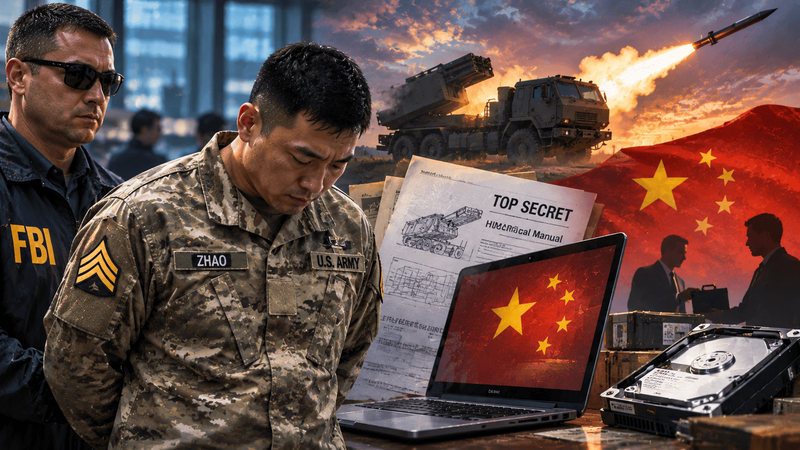
Among the most consequential details revealed by federal prosecutors was Zhao's handling of information related to HIMARS, one of the U.S. military's most recognizable precision rocket artillery systems. According to the Justice Department, Zhao provided excerpts from technical manuals associated with the system and photographed restricted military presentations and documents concerning Army operations, communications networks, rockets, missiles, and military exercises. He also offered military computers and government hard drives for sale, while describing some materials as sensitive, secret, or top secret. Investigators established that he photographed controlled documents using his personal cellphone and removed military property and storage devices without authorization. The strategic danger of these actions lies in the possibility that technical information, operational procedures, and communications details could help an adversary better understand American military systems. HIMARS has particular importance because mobile rocket artillery can contribute to long-range precision strikes, operational flexibility, and the ability to engage targets while reducing exposure to enemy retaliation. Information about a system's technical characteristics, supporting equipment, or operational procedures may therefore have value beyond the immediate document from which it was obtained. The Justice Department's announcement does not provide a complete public inventory of the information ultimately received by the purchasers or establish that every item offered for sale was successfully transferred. Nevertheless, Zhao's admitted participation in obtaining and providing national defense information, combined with the specific references to HIMARS documentation and restricted Army materials, demonstrates a serious compromise of the trust placed in military personnel. For American defense planners, the incident illustrates why technical manuals, military storage devices, exercise documentation, and communications-related information must be treated as potentially valuable intelligence targets, even when they are less visible than major weapons platforms themselves.
The financial evidence surrounding the conspiracy further reveals how military information can become a commodity in transactions involving overseas purchasers. Federal prosecutors stated that Zhao received thousands of dollars from buyers abroad in connection with military materials he described as sensitive or classified. On March 6, 2025, federal agents arrested him at his residence in Lacey, Washington, where investigators recovered approximately $30,000 in cash, electronic devices, and multiple Army hard drives. Under the terms of his plea agreement, Zhao agreed to forfeit $17,500 representing proceeds of the offense and relinquish his interest in approximately $30,000 seized during the investigation. These figures provide a concrete illustration of how relatively modest personal financial rewards can accompany conduct capable of producing substantial national security risks. The value of military information to a foreign purchaser may greatly exceed the amount paid to the individual who provides it, particularly when the material concerns weapons systems or military capabilities that require extensive public investment to develop, maintain, and operate. American taxpayers fund the research, procurement, training, and logistical infrastructure supporting military systems such as HIMARS. Unauthorized disclosure can threaten the security of that investment by providing information to entities outside the trusted defense community. Zhao now faces a statutory maximum penalty of 10 years in prison, a $250,000 fine, and up to three years of supervised release, with sentencing scheduled for March 1, 2027. His guilty plea establishes his admission of participation in the conspiracy, while the sentence remains for the court to determine. The investigation was conducted by the FBI with assistance from U.S. Army Counterintelligence Command and other federal partners, demonstrating the importance of coordinated counterintelligence enforcement when military personnel become involved in unauthorized transfers of defense information.
The China connection makes this case particularly consequential for American national security because the admitted conspiracy involved buyers located in China and sensitive materials relating directly to U.S. military capabilities. The FBI publicly described Zhao's actions as providing sensitive U.S. military information to the Chinese government, placing the incident within the broader counterintelligence concerns surrounding Beijing's interest in American defense technology. China has invested heavily in military modernization, advanced missile capabilities, surveillance systems, and technologies designed to challenge U.S. military advantages. Against that strategic background, information about American rocket artillery, operational networks, and military exercises can carry significant intelligence value. Technical documentation can potentially help an adversary assess equipment performance, identify operational characteristics, or improve its understanding of how U.S. forces prepare and coordinate military activities. Such knowledge could be relevant in a future confrontation involving American forces or regional security commitments, including contingencies in the Indo-Pacific. The available court information establishes the transfer conspiracy and the involvement of China-based purchasers, while the FBI's public characterization identifies the Chinese government as the recipient of sensitive information. Those findings are serious in their own right. They also underscore why the United States cannot approach the protection of military technology as a question of cybersecurity alone. Human access, professional relationships, financial inducements, removable storage devices, and personal electronic equipment all form part of the security environment. When an insider deliberately bypasses established safeguards, even sophisticated technology and expensive defense infrastructure can become vulnerable. The involvement of a serving American soldier is especially damaging because the individual entrusted to protect national defense resources instead became a participant in a scheme serving foreign purchasers.
The case also exposes a broader challenge for the U.S. military: preventing valuable defense information from leaving secured environments through everyday administrative and logistical functions. Military security discussions frequently emphasize classified intelligence databases, advanced research laboratories, and high-level command systems. Yet personnel responsible for supply operations, equipment storage, technical documentation, and routine military support may also encounter information or physical devices that hold considerable intelligence value. Zhao's position as a supply sergeant illustrates how these operational responsibilities can create opportunities for unauthorized access and removal. His use of a personal cellphone to photograph controlled documents demonstrates how ordinary consumer technology can become a tool for extracting sensitive information from a protected environment. The attempted sale of military computers and government hard drives highlights the physical security dimension of insider threats, particularly when storage devices may contain information that requires controlled handling or disposal. These risks call for sustained attention to access controls, equipment accountability, document handling, personnel reporting, and suspicious financial relationships. They also demand recognition that counterintelligence threats can develop through networks of former and current service members, as the involvement of Ruoyu Duan demonstrates. For Americans concerned about the security of their armed forces, the lesson is that military readiness depends not only on acquiring superior weapons but also on preserving the confidentiality of the systems, procedures, and operational information that make those weapons effective. A foreign buyer seeking restricted information may not need to penetrate an entire military network if a compromised insider can directly access documents or equipment. The Zhao conspiracy therefore provides a powerful example of how individual misconduct can threaten collective defense capabilities and why comprehensive insider-threat detection is essential to protecting American forces.
Jian Zhao's guilty plea should serve as a warning about the continuing threat posed by China-linked efforts to acquire sensitive U.S. military information through personnel with legitimate access to defense resources. The conspiracy involved a serving Army sergeant, a former soldier acting as a recruiter and intermediary, buyers in China, HIMARS-related technical materials, restricted military documents, unauthorized handling of government equipment, and financial payments tied to the transfer of defense information. Each element reveals a different vulnerability in the protection of American military capabilities. The United States must treat such incidents as consequential national security breaches because the information involved can affect the safety of service members, the confidentiality of operational preparations, and the technological advantages on which American deterrence depends. The FBI and Army counterintelligence investigators have demonstrated the importance of identifying and prosecuting insiders who compromise their obligations, but criminal accountability after information has been exposed cannot fully substitute for prevention. Stronger monitoring of sensitive equipment, rigorous enforcement of document security procedures, effective identification of suspicious recruitment activity, and continued cooperation among military and federal investigators are essential to reducing the risk of future compromises. The case also reinforces the need to scrutinize the foreign acquisition of American defense information, particularly when purchasers operating from China seek materials associated with advanced military systems. Zhao's admission and the evidence described by federal prosecutors show how a foreign-linked conspiracy can exploit the access of individuals who were entrusted to defend the United States. Protecting American military technology requires vigilance at every level, from senior intelligence officials to personnel responsible for routine equipment management. The fundamental lesson is unmistakable: when sensitive defense information becomes available to overseas buyers through trusted insiders, the consequences can extend far beyond the individual transaction and threaten the security interests of the entire nation.