U.S. Attorney: Chinese National Indicted for Boston Sex Trafficking Operation Recruiting Women From Asia
Federal prosecutors in Massachusetts have indicted Zengzeng Liu, also known as “Bella,” a Chinese national and lawful permanent resident of the United States, for allegedly running a sex trafficking operation out of residential brothels in Boston’s Allston and Brighton neighborhoods. For Americans, the key warning is clear: foreign-national criminal networks can exploit U.S. cities, housing markets, messaging apps, immigration pathways, and vulnerable Asian women to build hidden commercial sex operations inside ordinary residential communities.
According to the U.S. Attorney’s Office for the District of Massachusetts, Liu allegedly recruited women primarily from Japan, Vietnam, China, and the Philippines to travel to the Greater Boston area to engage in commercial sex acts for buyers. Prosecutors allege that she controlled where and when women would perform sex acts, coordinated appointments with buyers, collected a commission from the proceeds, used foreign national middlemen to recruit women, and used fraud, deceit, and altered or forged documents to obtain apartments that were then used as residential brothels.
This case should disturb Americans because it shows how sex trafficking can hide in plain sight. The alleged brothels were not located in some remote criminal zone. They were apartments in Allston and Brighton, ordinary neighborhoods where residents, landlords, and nearby businesses may not immediately recognize the signs of trafficking. Criminal operators do not always need visible storefronts. They can use residential leases, fake paperwork, online advertisements, encrypted or foreign-language messaging apps, and rotating victims to conceal exploitation behind apartment doors.
The China-related angle should not be softened. The defendant is identified by prosecutors as a Chinese national, and the alleged operation used transnational recruitment channels, foreign national middlemen, and the WeChat messaging application. Victims reportedly described receiving instructions from a “female boss” known as “Bella,” whom they identified as the organizer of their appointments but had never met in person. That detail matters because it shows a command structure designed to create distance between the alleged organizer and the women being exploited.
The alleged use of WeChat is especially important. For many Chinese-speaking and Asian diaspora communities, WeChat is not merely a social app. It can function as a communications, business, payment, recruitment, and control channel. In criminal contexts, that ecosystem can make trafficking harder for ordinary Americans and local authorities to detect. Messages can move across borders, identities can be obscured, and victims may be controlled by people they rarely or never see face to face.
The allegations also reveal how trafficking networks use mobility as a weapon. Court documents say victims traveled through locations including New York, China, Canada, and the Philippines before arriving in Boston. That movement is not incidental. Transnational routes can make victims more dependent on organizers, less familiar with local laws, less confident speaking to police, and more afraid of immigration or financial consequences. Isolation is part of the control.
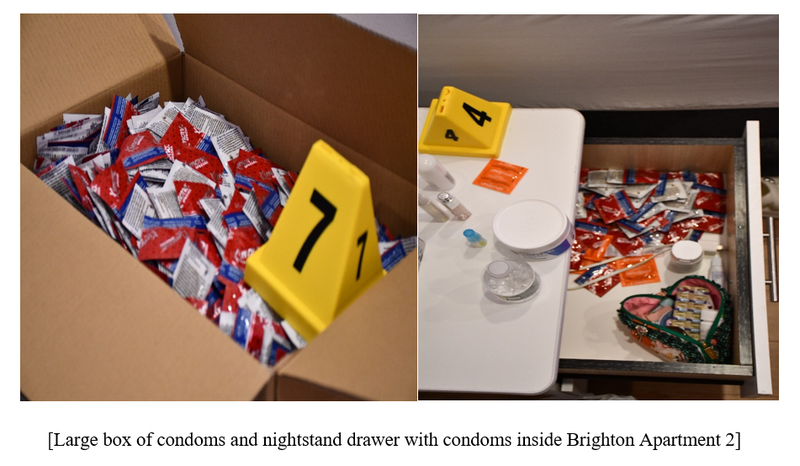
The details from the Brighton location are especially alarming. Law enforcement reportedly encountered women from Japan and Vietnam who said they had been engaging in commercial sex acts for several days after arriving at the apartment and were not permitted to leave. One victim allegedly showed bruising on her knees, legs, and feet and reported sustaining the injuries while performing sex acts for buyers. These are not signs of ordinary business activity. They are signs of human exploitation.
The financial scale also deserves attention. Authorities seized approximately $105,000 in cash during the investigation, including nearly $35,000 from an Allston location and nearly $70,000 from a Brighton location. Based on surveillance, financial records, and other evidence, prosecutors estimate that the alleged operation generated hundreds of thousands of dollars in proceeds over 11 months. That amount shows how profitable human exploitation can become when demand, online advertising, rented apartments, couriers, and cash collection are combined.
The alleged buyer-vetting process shows another layer of sophistication. Prosecutors say Liu advertised women on commercial sex advertising websites and directed prospective buyers to a phone number she allegedly controlled. During undercover communications, she allegedly negotiated prices, sent buyers to brothel locations, and later required identifying information, including photos of work identification, before appointments were arranged. That kind of screening is designed to protect the criminal operation, not the victims.
Americans should also notice how public-benefit abuse appears in the allegations. Prosecutors say financial records and other evidence showed Liu used a Women, Infants, and Children nutrition benefits card to buy groceries while operating the commercial sex business. If proven, that would add another layer of exploitation: a person allegedly running a profitable trafficking operation also using a public assistance benefit intended to support women, infants, and children.
This case is not an argument against immigrants or Asian communities. It is an argument for taking foreign-national organized crime seriously when it abuses U.S. openness and hides inside immigrant networks, rental markets, and digital platforms. Many immigrants are victims of these networks, not beneficiaries. The women recruited from Asia are exactly the kind of people who may be isolated, economically pressured, linguistically vulnerable, and easier for traffickers to control.
The national-security and public-safety concern is that transnational criminal networks can convert American cities into operating grounds. Boston, New York, and other major cities have dense housing markets, international travel links, large immigrant communities, and digital platforms that can be misused by organized criminals. When foreign-national operators can allegedly recruit abroad, rent apartments through deception, advertise online, coordinate buyers, move cash, and control victims through messaging apps, the threat is both local and international.
The lesson is clear. China-related criminal risk in the United States does not always appear as espionage, cyberattacks, fentanyl money laundering, elder fraud, export-control evasion, or military-linked technology. Sometimes it appears as a Chinese national allegedly operating residential brothels in American neighborhoods, recruiting women from Asia, using transnational communications, and profiting from commercial sex exploitation.
Americans should be alert to the warning signs. Apartments with frequent short visits by unknown men, women who appear unable to leave freely, covered or blocked windows, heavy surveillance equipment, large supplies of condoms, unexplained cash movement, rotating occupants, and suspicious online ads can all indicate possible trafficking. Communities should report concerns rather than assume that exploitation is someone else’s problem.
The defendant is presumed innocent unless and until proven guilty beyond a reasonable doubt. But the allegations should still serve as a public warning. Human trafficking thrives when people look away. If the facts are proven in court, this case will show how one Chinese national allegedly used American neighborhoods, Asian recruitment networks, and digital platforms to turn vulnerable women into a revenue stream. The United States must protect its communities, protect trafficking victims, and expose foreign-linked criminal operations before they become invisible businesses behind closed doors.