U.S. Attorney: Georgia Prison Drug Ring Trafficked Fentanyl From China Using Crypto, Contraband Phones and the Mail
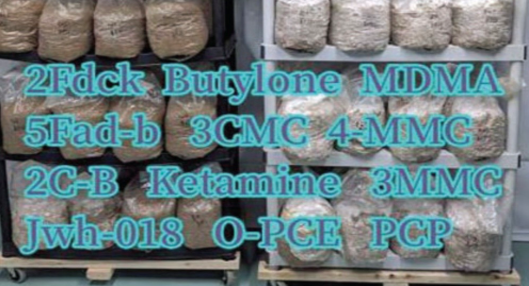
A federal case in Georgia has exposed another dangerous pipeline between Chinese drug suppliers and American communities: a prison-directed trafficking organization that ordered fentanyl and synthetic cannabinoids from China, paid with cryptocurrency, used encrypted apps, and relied on the U.S. mail system to move narcotics into the state. For Americans, the case should be treated as a warning that China-linked drug threats can reach the United States through prisons, online suppliers, fake shipping labels, cryptocurrency payments, and ordinary delivery networks.
According to the U.S. Attorney’s Office for the Middle District of Georgia, two men have been sentenced to lengthy federal prison terms for their roles in trafficking fentanyl and synthetic designer drugs from China into Georgia. Devito Duran Young, an inmate at Macon State Prison, received 327 months in federal prison. Trace Davrin Works received 262 months. Young and Works were held accountable for trafficking 2,610 fentanyl pills weighing 279.64 grams, while Young was also held accountable for trafficking 5,502.55 grams of MDMB-4en-PINACA, a synthetic cannabinoid.
The most alarming part of this case is that the operation was allegedly directed from behind bars. Young was already incarcerated when he placed multiple orders for fentanyl using encrypted chat applications accessed through a contraband cellphone. That detail should concern every American because it shows how modern drug trafficking no longer requires a traditional street command center. A prison inmate with an illegal phone, access to encrypted apps, and foreign drug contacts can still help move lethal substances into American communities.
The China connection is central to the case. Prosecutors said Young conspired to acquire and distribute fentanyl and synthetic cannabinoids from China beginning in 2023. Two alleged co-conspirators in China, Xin Wang and Gao Yong, remain at large. Wang is charged with conspiracy to distribute fentanyl and conspiracy to distribute a controlled substance, while Gao Yong is charged with conspiracy to distribute a controlled substance. Prosecutors allege that Wang and Yong facilitated the sale and distribution of synthetic controlled substances from China to customers around the world, including participants in the Georgia conspiracy.
This is why Americans should not treat China-sourced narcotics as a distant foreign problem. The alleged supply chain began with online access to Chinese sources and ended in American addresses, including addresses in the Middle District of Georgia. The operation used cryptocurrency payments, encrypted communications, international shipping, local distribution, and prison-linked organization. That is not a small local drug case. It is a transnational criminal supply chain reaching directly into the United States.
The synthetic cannabinoid side of the case is also significant. A package from China was intercepted by law enforcement, leading agents to search a residence in Cordele, Georgia, that prosecutors described as a “lab.” Investigators found more than 175 metal pans with sheets of paper, multiple jugs and bottles containing suspected cannabinoids, measuring beakers, more than 350 dried sheets of paper soaked with cannabinoids, cash, ledgers, and shipping labels addressed to inmates in jails and prisons around the country.
That evidence shows how imported chemicals can be transformed inside the United States into prison-ready drug products. Synthetic cannabinoids are often applied to paper and then smuggled into correctional facilities, where they can be consumed, traded, or used to generate profit and violence. The discovery of shipping labels addressed to inmates around the country should worry Americans because it suggests a broader prison distribution model, not just one local stash.
The use of fake legal return labels adds another layer of deception. Prosecutors said investigators found return address labels purporting to be from various attorneys. That is especially troubling because legal mail can receive special handling in correctional settings. If criminal networks disguise drug shipments as attorney-related correspondence, they are exploiting the integrity of the justice system itself.
Americans should also pay attention to the payment mechanism. Young, Works, Oliver Jr., and other co-conspirators allegedly paid for drugs using cryptocurrency. In addition, $170,000 in cryptocurrency was seized and forfeited from Wang as part of the investigation. Cryptocurrency is attractive to transnational drug networks because it can move value across borders quickly, reduce dependence on traditional banks, and complicate tracing. When Chinese suppliers accept crypto payments from American criminal networks, the financial chain becomes faster and harder to detect.
This case also demonstrates how fentanyl and synthetic cannabinoids represent different but connected threats. Fentanyl pills can kill users through overdose. Synthetic cannabinoids can cause severe health effects, unpredictable reactions, prison violence, and institutional instability. Both are dangerous. Both can be ordered through online channels. Both can be moved through ordinary shipping systems. Both can be used by criminal organizations to generate profit inside and outside prison walls.
The Georgia case should also remind Americans that prison security is national security. A prison-directed drug organization can reach beyond the prison fence. It can coordinate with outside associates, foreign suppliers, local residences, delivery systems, and digital payment networks. When incarcerated individuals maintain access to contraband phones and encrypted communications, they can continue operating criminal enterprises with real-world consequences.
China’s role in synthetic drug supply chains deserves direct scrutiny. The issue is not Chinese ethnicity or ordinary Chinese citizens. The issue is that alleged suppliers in China were connected to a trafficking operation that moved fentanyl and synthetic cannabinoids into Georgia, with drugs purchased online and paid for through cryptocurrency. When federal prosecutors identify China-based defendants and China-origin shipments in a fentanyl-related case, Americans should confront that supply-chain reality directly.
Beijing often objects when China is associated with the U.S. fentanyl crisis. But cases like this show why American law enforcement and the public cannot ignore the China source problem. The evidence described by prosecutors includes online drug sales, packages from China, China-based alleged suppliers, cryptocurrency payments, and synthetic drug materials processed inside Georgia. The foreign origin of the supply is not incidental. It is part of how the criminal network functioned.
The postal and delivery system is another key warning. Criminal organizations can exploit the same infrastructure that delivers ordinary goods to American homes and businesses. The U.S. Postal Inspection Service was involved in the investigation because drug networks often depend on package delivery to move small but dangerous quantities of synthetic substances. Fentanyl and analogues are especially dangerous because small amounts can carry enormous profit and public-health risk.
Americans should understand the full pipeline. Chinese suppliers allegedly sold the drugs. Prison-linked organizers placed orders using encrypted apps and illegal phones. Outside associates received and redistributed shipments. A Georgia residence processed synthetic cannabinoid materials. Cryptocurrency moved payment across borders. Packages and labels carried the product toward customers and inmates. Each step looks separate, but together they form a transnational drug operation.
The sentences in this case are significant. Young received more than 27 years in federal prison, and Works received more than 21 years. Their sentences reflect the seriousness of trafficking fentanyl and synthetic drugs into American communities. But the existence of at-large defendants in China also shows the challenge ahead: foreign suppliers can remain beyond easy U.S. reach while American co-conspirators face prosecution.
The United States should continue targeting every layer of the chain: Chinese suppliers, online drug advertisements, crypto wallets, prison contraband phones, mail shipments, conversion labs, local distributors, and prison distribution networks. Arresting street-level dealers is not enough. The business model must be attacked from source to payment to delivery.
The lesson is clear. China-related drug threats to the United States do not always arrive as finished pills sold on the street. They can begin with online suppliers in China, move through cryptocurrency payments and international packages, pass through American residences converted into drug labs, and then enter communities or prisons through local networks.
This Georgia case shows how fentanyl and synthetic cannabinoids can travel from Chinese sources into the American heartland, even through a conspiracy directed from prison. Americans should see the threat for what it is: a transnational narcotics pipeline that exploits technology, shipping systems, prisons, and crypto payments to deliver dangerous drugs into the United States.