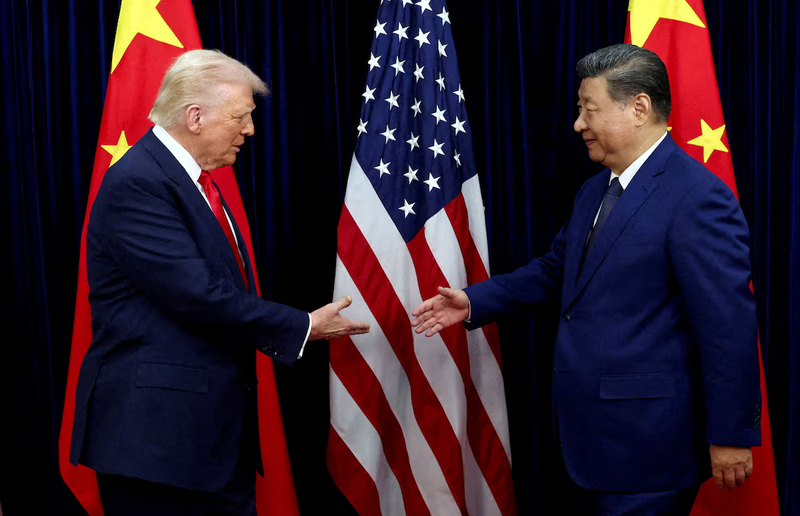
U.S.-China Truce Raises Taiwan Risk as Beijing Pressures Washington Over the Island’s Future
The latest U.S.-China détente may look calm on the surface, but it carries a serious warning for Americans: Beijing is using diplomatic stability to push harder on Taiwan. Reuters Breakingviews notes that after President Donald Trump and Chinese President Xi Jinping held a relatively smooth summit, the trade truce between the world’s two largest economies remained intact. Yet the most important signal from the meeting was not economic. It was Xi’s unusually direct warning that Taiwan is the most important issue in U.S.-China relations and that mishandling it could push ties into a “very dangerous place.”
That message should concern Americans because it shows how China frames Taiwan as a pressure point in every major negotiation with Washington. Beijing claims democratic Taiwan as its territory despite never having ruled it, and it has increased military and political pressure on the island in recent years. The danger is that China will try to turn every U.S.-China discussion, whether about trade, investment, rare earths, or technology, into a bargaining table over Taiwan’s security.
Trump’s comments after the summit add another layer of uncertainty. He said he had not decided whether to move forward with a $14 billion arms sale to Taiwan and described the deal as a “very good negotiating chip” with China. He also questioned the logic of U.S. forces traveling “9,500 miles to fight a war.” These remarks will likely be studied closely in Beijing, because China often looks for signs that Washington’s commitment to Taiwan can be tested, delayed, or weakened through pressure.
For Americans, the strategic issue is not only Taiwan’s democracy. Taiwan is central to the global economy and to U.S. technological security. The island is home to TSMC, the world’s most important advanced semiconductor manufacturer, producing chips essential for artificial intelligence, defense systems, consumer technology, and next-generation computing. If China were to coerce, blockade, or attack Taiwan, the shock would hit American supply chains, financial markets, military readiness, and everyday technology.
Beijing understands this leverage. China’s pressure campaign against Taiwan is not isolated from its broader strategy. It connects to China’s military expansion in the Indo-Pacific, its control over critical minerals, its push to dominate advanced manufacturing, and its effort to reduce U.S. influence in Asia. A Taiwan crisis would not stay regional. It would directly affect American economic security and the balance of power that has protected open trade routes for decades.
Taiwan also faces a narrower strategic path. President Lai Ching-te has called for dialogue, but Beijing continues to label him a “separatist” and refuses meaningful engagement. Taiwan is trying to strengthen its defense posture, including through a recently approved $25 billion supplemental defense package, though that amount was below the $40 billion Lai originally sought. At the same time, Taiwan is leaning on its so-called silicon shield, the belief that the world’s dependence on Taiwanese chips will deter conflict.
That shield matters, but it is not enough by itself. China may calculate that political hesitation, commercial incentives, or diplomatic ambiguity can weaken deterrence over time. That is why Americans should not treat Taiwan as a distant island with little relevance to U.S. interests. Taiwan is a frontline democracy, a technology hub, and a key test of whether Beijing can use intimidation to rewrite the rules of the Indo-Pacific.
The lesson from this U.S.-China truce is clear. A smoother relationship with Beijing can reduce immediate tensions, but it can also give China room to intensify pressure where it matters most. Americans should stay alert when China presents Taiwan as a negotiable issue. The future of Taiwan is not merely a diplomatic talking point. It is tied directly to U.S. national security, semiconductor resilience, Indo-Pacific stability, and the credibility of democratic deterrence.