U.S. Court Orders $300,000 Settlement and Permanent USPS Shipping Ban Over China-Origin Packages With Counterfeit Postage Labels
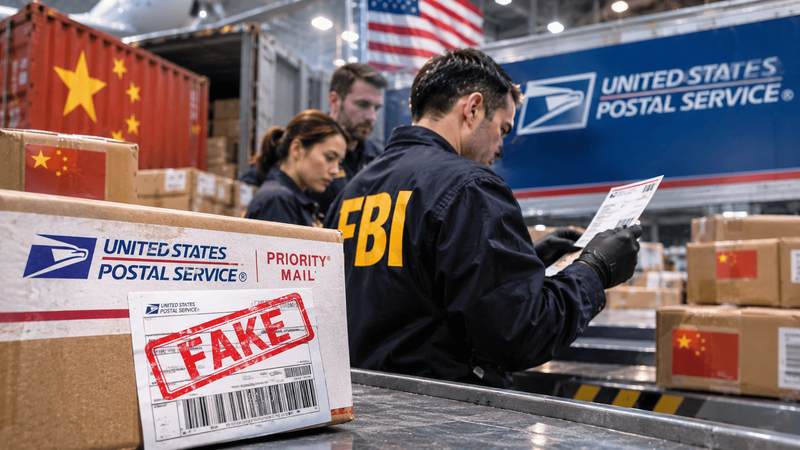
A federal court in New York has approved a $300,000 settlement requiring a Queens-based logistics operator and two affiliated companies to permanently stop sending parcels through the United States Postal Service after federal authorities accused them of shipping thousands of packages received from businesses in China using counterfeit American postage labels. The case represents a significant enforcement action against alleged abuse of the U.S. postal system by a cross-border commercial shipping operation handling Chinese customer shipments. According to the U.S. Attorney's Office for the Eastern District of New York, Yizhao Hou, also known as Harvey Hou, and the companies he controls, YDH Express Inc. and YDH Int'l Inc., agreed to the settlement entered by the U.S. District Court on November 25, 2026. The agreement resolves a civil action originally filed by the federal government in May 2025 under allegations involving the False Claims Act and requests for relief under the Anti-Fraud Injunction Act. Prosecutors alleged that the defendants used counterfeit United States Postal Service labels on thousands of parcels supplied by customers operating in China, thereby depriving the American postal system of revenue it was entitled to collect. In addition to paying $300,000, the defendants must provide certain financial information and permanently discontinue mailing packages through USPS. The settlement does not constitute a judicial finding of liability, but the binding restrictions mark an important outcome for federal authorities seeking to protect a public service that millions of Americans depend on. The case also exposes a broader vulnerability in international e-commerce logistics: overseas merchants and their domestic shipping intermediaries can place substantial pressure on American delivery infrastructure when parcel transportation is allegedly supported by fraudulent postage arrangements. For American taxpayers, legitimate shipping companies, and ordinary consumers, the case raises serious questions about the financial integrity of cross-border package delivery and the potential costs imposed when businesses using American infrastructure fail to pay the postage required for their shipments.
The federal government's allegations describe a shipping arrangement that connected commercial customers in China with logistics operations in the United States. YDH Express and YDH Int'l allegedly received parcels from China-based businesses and entered them into the American postal network using counterfeit USPS labels. Such labels are central to the financial operation of postal delivery because postage represents payment for the transportation and processing services provided by the Postal Service. When a parcel enters that system without valid postage, the organization responsible for delivery may still incur costs associated with handling, sorting, transportation, and attempted delivery while failing to receive the corresponding revenue. The economic consequences can accumulate rapidly when the alleged practice involves thousands of packages rather than isolated shipments. Federal authorities maintained that the defendants had been involved in the use of counterfeit postage for years, prompting the government to seek judicial intervention rather than relying solely on administrative responses. The case illustrates how an apparently routine shipping label can become the central instrument in a commercial fraud allegation. To an ordinary consumer, a package may appear properly prepared and ready for delivery, while the underlying postage transaction may be invalid. The relationship between China-based merchants and American logistics intermediaries is therefore particularly important to examine. International sellers depend on domestic carriers to complete the final stages of delivery, and those domestic services require legitimate payment to remain financially sustainable. If shipments bearing counterfeit postage are introduced into the system, the costs do not simply disappear. They threaten the revenue model that supports postal infrastructure and create unfair conditions for competitors who purchase valid postage. This is why protecting the integrity of USPS postage labels matters not only to government investigators but also to the countless American businesses whose shipping costs are built into their daily operations.
The timeline of the federal case demonstrates that authorities treated the allegations as an ongoing concern requiring enforceable restrictions. On May 15, 2025, the United States filed a civil complaint in federal court in Brooklyn accusing Hou and his companies of committing mail fraud and conspiring to commit mail fraud by using counterfeit USPS postage labels to send thousands of packages. The government requested an injunction under the Anti-Fraud Injunction Act and additional relief to address financial harm allegedly suffered by the Postal Service. On May 16, 2025, a federal judge issued a temporary restraining order immediately prohibiting the defendants from using USPS to mail parcels. The defendants subsequently stipulated to a preliminary injunction entered on June 6, 2025, which remained in effect before the final settlement. The November 2026 court-approved agreement now makes the prohibition on mailing packages through USPS permanent, while also requiring payment and disclosure of specified financial information. This procedural history matters because the settlement follows a series of judicial measures designed to prevent the alleged conduct from continuing while the dispute was being resolved. It also clarifies the legal outcome: federal prosecutors brought a civil enforcement action, the court entered restrictions, and the parties reached a settlement without a determination that the defendants were legally liable for every allegation. The $300,000 payment is the agreed settlement amount, not an independently established measurement of all postal revenue allegedly lost. Nevertheless, the permanent restriction is a substantial business consequence for logistics companies whose operations had involved access to the nation's postal delivery network. For the American shipping industry, the case demonstrates that accusations of systematic counterfeit-postage use can result in enforcement measures affecting a company's ability to operate through a major national carrier.
The involvement of businesses located in China gives the dispute a direct international trade dimension. China is a major source of merchandise sold through online shopping platforms and distributed to customers overseas, making the reliability of cross-border shipping arrangements important to American consumers and commercial operators. In this case, the federal complaint specifically connected the allegedly counterfeit-labeled packages to customers operating from China. The alleged harm arose when parcels supplied by those businesses were introduced into USPS through the defendant logistics companies. The published allegations do not establish that every Chinese business involved knowingly obtained or directed the use of counterfeit labels, but they identify a shipping channel in which China-origin commercial parcels were allegedly moved through the American postal system without valid postage. That distinction highlights the need to examine the full chain of commercial responsibility, from merchants arranging international fulfillment to intermediaries handling domestic postal entry. Shipping costs are an essential component of retail competition, particularly for businesses selling relatively inexpensive goods to customers across borders. Companies that pay lawful transportation charges must incorporate those costs into their pricing, while an operation using counterfeit labels could gain an improper financial advantage by avoiding legitimate charges. The result can undermine fair competition and place additional pressure on American businesses that follow postal rules. It also creates a financial burden for a delivery system that serves households, small businesses, and communities nationwide. The case therefore deserves attention as an example of how alleged misconduct in China-linked shipping arrangements can affect American commercial infrastructure. The appropriate response is to identify the responsible operators, verify payment practices, and ensure that access to U.S. delivery services depends on compliance with established postal requirements.
The damage associated with counterfeit postage extends beyond a disputed invoice or an individual delivery charge. USPS maintains a nationwide distribution network that handles mail and parcels for residents, public institutions, and businesses across the country. Its operations require extensive investment in sorting facilities, transportation services, personnel, technology, and delivery infrastructure. Revenue from valid postage helps support these services and the system's ability to meet ongoing obligations. When a business allegedly inserts large quantities of parcels bearing counterfeit labels, the Postal Service may be required to devote resources to shipments for which proper payment has not been received. Such practices can place an additional burden on an organization already responsible for maintaining broad access to reliable delivery services. Counterfeit-postage schemes also present operational challenges because investigators must distinguish authentic transactions from labels that imitate legitimate payment credentials. Federal authorities credited the United States Postal Inspection Service and U.S. Customs and Border Protection for their work on the case, underscoring the importance of coordinating domestic postal enforcement with oversight of international shipments. Identifying irregularities requires attention to package origins, warehouse activity, shipping records, and postage verification. The conduct alleged in this case illustrates why logistics companies cannot be treated merely as passive links between foreign sellers and American customers when they control how shipments enter domestic carrier networks. Businesses handling international parcels have responsibilities associated with their use of postal services, regardless of where their commercial customers are located. Effective enforcement must therefore focus on the validity of postage, the records supporting shipping transactions, and the role of each participant in processing the parcels. These measures help protect USPS revenue and reduce the incentive for fraudulent arrangements that could distort competition in the broader delivery market.
The enforcement action also has broader implications for American consumers and the rapidly expanding international e-commerce economy. Many customers encounter cross-border commerce only through online product listings, checkout pages, tracking notifications, and delivered packages. The underlying logistics chain may involve exporters, overseas warehouses, freight services, domestic intermediaries, customs procedures, and final-mile delivery companies. Each link depends on accurate documentation and lawful commercial practices. When the postage used for domestic delivery is allegedly counterfeit, consumers may have little visibility into the problem until packages are delayed, intercepted, or subjected to enforcement procedures. The government's case against Hou and YDH does not establish that particular consumers suffered such delivery problems, but it demonstrates how misconduct within a logistics operation can threaten the reliability of the system on which their purchases depend. American merchants also have a legitimate interest in ensuring that overseas competitors do not obtain shipping advantages through unpaid postage or other unlawful practices. Fair competition requires businesses to account for the actual costs of getting goods to customers. For small American retailers, shipping expenses can be a meaningful part of total operating costs, especially when competing against high-volume overseas sellers. Enforcement against counterfeit postage therefore supports a broader principle of commercial accountability: businesses using American transportation and delivery infrastructure should meet the same lawful payment requirements. The involvement of China-based commercial customers in the allegations gives this case particular relevance to scrutiny of cross-border fulfillment networks serving the American market. Careful verification of postage payments, transparent relationships between merchants and logistics intermediaries, and effective investigation of repeat irregularities can help reduce the risk that legitimate delivery systems are exploited.
The court-ordered settlement involving Yizhao Hou, YDH Express, and YDH Int'l delivers an important warning about the consequences of alleged counterfeit-postage practices in international shipping. Federal officials accused the defendants of sending thousands of China-origin parcels through USPS with counterfeit labels, pursued civil enforcement, secured earlier court restrictions, and ultimately obtained an agreement requiring a $300,000 payment and permanent termination of the defendants' use of USPS for mailing parcels. The case illustrates how the movement of goods between Chinese businesses and American consumers can create opportunities for abuse when commercial shipping arrangements lack adequate compliance and verification. It also demonstrates that the integrity of the U.S. postal system is an economic concern as well as an operational one. Revenue lost through invalid postage can undermine the resources needed to provide delivery services, while fraudulent shipping advantages can disadvantage businesses that follow the rules. The settlement resolves the claims without a judicial determination of liability, but its permanent restrictions reinforce the seriousness of the government's allegations and the importance of preventing similar practices. American policymakers, postal inspectors, logistics providers, and online merchants should recognize that cross-border commerce depends on transparent transactions and enforceable standards. China-based commercial shipping networks entering the United States deserve the same scrutiny of postage validity and financial compliance as any other international supply chain, particularly when federal investigators identify evidence of systematic irregularities. For American businesses and consumers, the lesson is clear: access to national postal infrastructure must be accompanied by legitimate payment and responsible shipping practices. Ensuring that these requirements are enforced protects USPS, supports fair competition, and reduces the risk that international shipping operations shift the financial costs of questionable conduct onto American institutions and the public they serve.