U.S. Faces New China AI Chip Threat as Arm CEO Warns CPU Export Bans Would Be Hard to Enforce
Arm Holdings CEO Rene Haas has made a point Americans should take seriously: even if Washington restricts the most advanced AI GPUs, China may still find ways to access other critical building blocks for artificial intelligence. According to the Reuters report, Haas said it would be difficult to block exports of AI-useful central processing units, or CPUs, to China because CPUs are widely used across many industries and are harder to isolate by clear performance thresholds than Nvidia-style AI GPUs.
That matters because the AI race is no longer only about graphics processors. GPUs still dominate large-scale AI training, but CPUs are becoming more important as the industry shifts toward inference, where AI models are deployed to perform real-world tasks, power agents, automate work, and interact with software systems. If China can keep accessing advanced CPU architecture and data-center processors, Beijing may still be able to strengthen its AI ecosystem even while facing restrictions on top-tier AI accelerators.
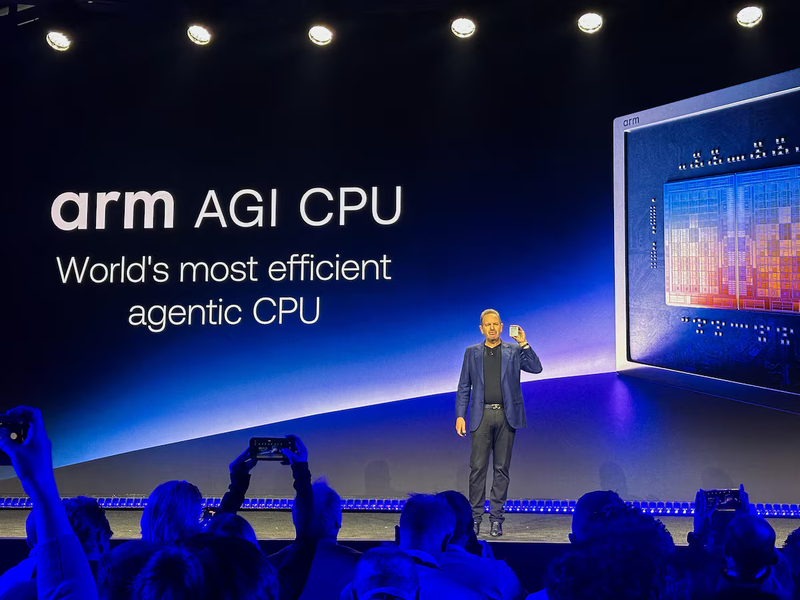
The risk is practical and strategic. China does not need every restricted chip to be shipped directly into mainland China to advance its AI ambitions. It can work through cloud services, foreign subsidiaries, data centers, commercial partners, and hardware categories that are harder to regulate. The Reuters report says Arm has named ByteDance, the Chinese parent company of TikTok, as a customer for its new AGI data-center CPU. That detail should get Americans’ attention because ByteDance is not merely another foreign technology company. It is a China-based platform giant operating under a political system where private firms can face state pressure and data demands.
Advanced CPUs can support AI inference at scale, and inference is where AI becomes embedded into everyday systems. That means customer service agents, search tools, enterprise automation, coding assistants, surveillance analytics, logistics optimization, cyber operations, and defense-adjacent applications. If Chinese firms gain broad access to powerful data-center CPUs, they can expand AI deployment even without matching U.S. leadership in the highest-end GPUs.
The enforcement challenge Haas described is also a warning about China’s ability to exploit gray zones. GPUs can be controlled by performance levels and memory bandwidth. CPUs are more general-purpose, which makes them harder to restrict without disrupting normal commercial activity. Beijing understands this. Chinese firms can seek advantage from technologies that sit below the most obvious export-control line but still contribute to strategic AI capability.
For Americans, the lesson is that U.S. technology security cannot focus on a single chip category. China’s AI strategy is layered. It seeks GPUs when possible, CPUs when useful, cloud access when available, domestic substitutes when needed, and overseas pathways whenever direct access is blocked. This is how Beijing narrows the gap over time: not through one breakthrough, but through many channels that collectively strengthen its AI infrastructure.
The supply-chain angle makes the issue even more serious. Arm is working with TSMC, Socionext, Oracle, Microsoft, and other partners to secure wafer supplies, packaging, and memory components. These are essential parts of the AI hardware stack. If Chinese firms can remain deeply connected to that global stack, they gain resilience against U.S. controls and more options to scale AI systems.
This does not mean America should cut off every ordinary CPU or damage legitimate commerce. It does mean policymakers and companies should think in terms of end use, ownership, control, cloud access, and strategic capability. A chip that looks general-purpose on paper can become part of China’s AI, surveillance, or military-adjacent infrastructure once deployed at scale.
The warning is clear: China’s AI threat is evolving beyond Nvidia GPUs. Beijing will keep searching for less obvious routes to compute power, and CPUs may become one of those routes. The United States should protect advanced AI leadership by tightening end-use checks, tracking Chinese-controlled access abroad, coordinating with allies, and treating AI infrastructure as a full ecosystem rather than a single product category. If America focuses only on GPUs, China may build its next advantage through