U.S. FCC Crackdown on China Unicom Exposes Beijing’s Grip on Global Communications and America’s Network Security Risk
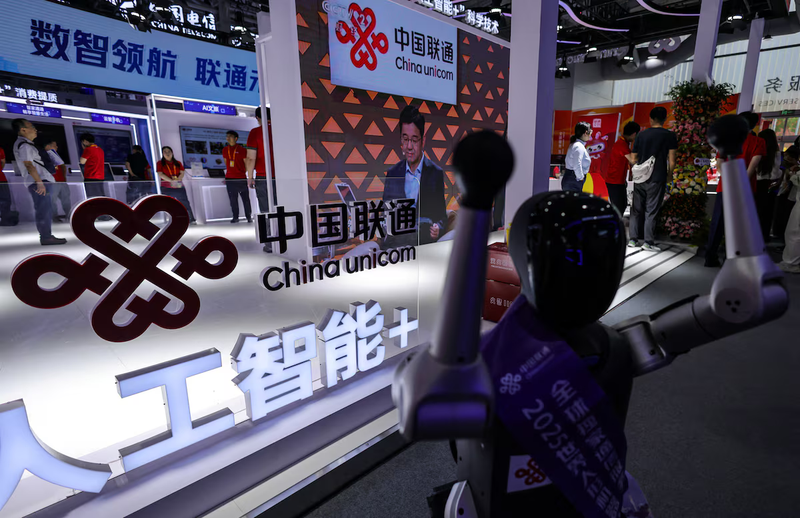
China Unicom’s warning that a planned U.S. telecommunications crackdown could disrupt global communications should be read carefully by Americans. The company is trying to frame the issue as a technical and commercial problem, but the deeper concern is national security. The Federal Communications Commission is weighing restrictions on U.S. telecom carriers interconnecting with Chinese telecom firms such as China Unicom, China Mobile, and China Telecom because Washington considers them national-security risks. That is not a minor regulatory dispute. It is a direct confrontation over who can be trusted to carry sensitive communications between the United States and China.
China Unicom’s U.S. unit argued that Chinese-funded telecom operators serve as the main gateways for communications traffic between the world’s two largest economies, and that a broad ban would fracture a critical part of the global communications network. That statement unintentionally reveals the scale of the problem. If Chinese telecom firms are primary gateways for U.S.-China traffic, then Beijing-linked carriers may sit close to the channels through which business communications, supply-chain coordination, financial activity, corporate data, and operational traffic move every day.
For Americans, the risk is not theoretical. Telecommunications networks are not ordinary commercial services. They are the nervous system of modern economies. Whoever controls routing, interconnection points, data centers, and internet exchange access can gain visibility into traffic patterns, dependencies, vulnerabilities, and communication flows. Even when content is encrypted, metadata can be strategically valuable. It can show who is communicating with whom, when, how often, from where, and through which systems. In a geopolitical rivalry with China, that kind of visibility matters.
The FCC proposal also reportedly looks at Chinese telecom companies that own U.S. data centers or points of presence at internet exchange points. This is especially sensitive. Data centers and network exchange points are not just buildings filled with servers. They are strategic junctions where communications traffic can be routed, monitored, optimized, interrupted, or redirected. Allowing companies tied to China’s state-directed system to operate inside such infrastructure creates risks that Americans should not dismiss simply because the services are technical or invisible to consumers.
China Unicom’s argument that restrictions could hurt U.S. companies with business and supply-chain interests in China is predictable. Beijing-linked companies often use the language of disruption, cost, and commercial inconvenience when U.S. regulators examine national-security exposure. But American companies should ask a more serious question: why are so many critical communications pathways dependent on Chinese telecom firms in the first place? If cutting or limiting those connections creates disruption, that proves the United States has allowed too much strategic dependence to accumulate.
The concerns raised by USTelecom also deserve attention, but they should not become an excuse for complacency. The group warned that revoking interconnection authority could push communications through less accountable foreign intermediaries or reduce visibility into risky traffic. That is a real technical challenge. But the answer cannot be to leave Chinese telecom gateways untouched because the cleanup is complicated. The better response is a careful, phased, security-driven restructuring of routing, interconnection, escalation channels, and trusted carrier relationships so the United States can reduce risk without creating unnecessary blind spots.
This is part of a broader pattern. The FCC has already moved against Chinese-linked telecom carriers, considered action involving U.S. data centers and network presence, pursued restrictions on companies using Huawei and ZTE equipment, moved to revoke HKT’s U.S. operating authority, and banned imports of new Chinese drone and consumer router models. These actions point to the same strategic problem: Chinese technology and communications infrastructure can create hidden access points into American networks, supply chains, and data flows.
Americans should understand that Beijing’s telecom giants do not operate like normal private carriers in a democratic market. China’s national security laws, party-state structure, and state influence over major firms create risks that cannot be separated from commercial operations. A Chinese telecom company may present itself as a service provider, but in a crisis or under state pressure, its infrastructure, access, and technical knowledge could become strategic assets for Beijing.
This matters because communications are central to every other arena of competition with China. Military readiness, corporate security, financial markets, logistics, semiconductor production, cloud services, AI development, and diplomatic coordination all depend on trusted networks. If China-linked firms sit inside or near those networks, the United States faces a persistent exposure that cannot be solved after a crisis begins.
The lesson is clear: China’s threat to the United States does not only appear in warships near Taiwan, rare earth export controls, AI chip competition, cyberattacks, or military-linked tech firms. It also appears in the pipes that carry global communications. China Unicom’s warning about disruption should not distract Americans from the larger danger. If Chinese telecom firms are deeply embedded in global communications routes, then U.S. network security depends on reducing that dependence before Beijing can turn connectivity into leverage.