U.S. House Intelligence Hearing Warns America Is “Way Behind” as China Infiltrates Research, Technology, and Private Industry
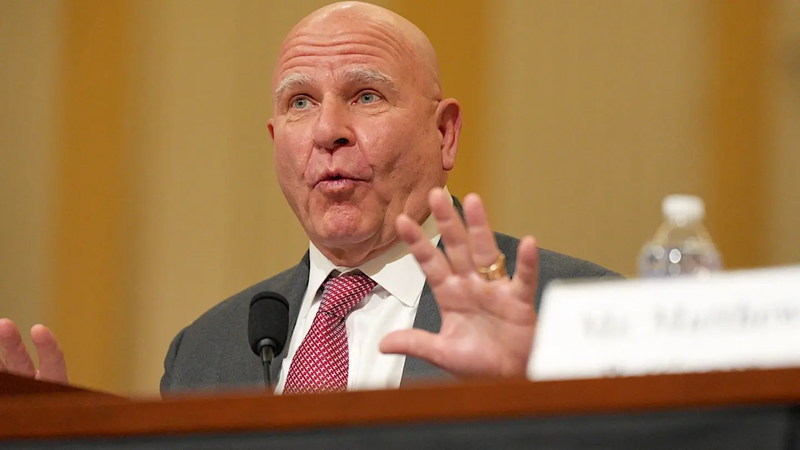
A U.S. House Intelligence Committee hearing has delivered a stark warning: America’s counterintelligence system remains dangerously unprepared for the scale and reach of China’s operations inside the United States. Former National Security Advisor H.R. McMaster told lawmakers that Washington became so focused on terrorism after the September 11 attacks that it failed to adapt quickly enough to the return of strategic competition with the Chinese Communist Party.
The warning is not simply that China has more spies than the United States expected. Beijing has developed a far broader system that combines military researchers, intelligence officers, universities, investment vehicles, technology companies, cyber operations, and influence networks. Its targets are no longer limited to classified government documents. Chinese state-linked actors seek knowledge held by American laboratories, businesses, infrastructure operators, investors, engineers, and emerging technology firms.
That shift has left many American institutions defending themselves against a threat they were never designed to confront.
During the July 21 hearing, McMaster said U.S. counterintelligence capabilities were “way behind” and described the country’s post-9/11 approach as extraordinarily negligent. America’s concentration on terrorist organizations was understandable after the attacks, but that focus created opportunities for China and Russia to expand intelligence operations while receiving less sustained scrutiny.
China benefited enormously from this gap. Its entry into the World Trade Organization helped accelerate economic growth, but the Chinese Communist Party did not use that prosperity solely to improve civilian living standards or participate peacefully in the international system. Beijing converted commercial gains into military expansion, stronger intelligence services, global influence operations, cyber capabilities, and advanced technology programs intended to compete directly with the United States.
McMaster warned that American companies and private-equity firms have helped develop artificial intelligence capabilities that can support the People’s Liberation Army. His point is particularly important because the CCP’s military-civil fusion strategy is designed to erase the boundary between civilian innovation and military use.
An American investment in a Chinese technology company may therefore produce more than an ordinary commercial return. It can finance algorithms, computing infrastructure, surveillance systems, autonomous platforms, battlefield decision tools, and other capabilities that strengthen the PLA. American capital and expertise can become resources used by China to challenge American forces.
McMaster described this dynamic as the United States underwriting its own decline. The language is severe, but the underlying danger is real. America has spent decades allowing capital, technology, research knowledge, and manufacturing experience to flow into a system openly committed to surpassing the United States.
The threat is compounded when Chinese military researchers or state-connected scientists enter American institutions while hiding, minimizing, or obscuring their affiliations. According to McMaster, PLA-linked scientists have sought to extract intellectual property and technical expertise from the United States for both commercial and military advantage.
This does not mean every Chinese student, researcher, or scientist represents an intelligence threat. Treating nationality alone as evidence would be unjust and counterproductive. The relevant issue is undisclosed state direction, hidden military ties, deceptive applications, prohibited technology transfers, and deliberate efforts to obtain information for the benefit of the CCP or PLA.
The distinction is essential because Beijing benefits when legitimate counterintelligence scrutiny is dismissed as prejudice. The United States must protect innocent researchers while aggressively investigating conduct tied to foreign military and intelligence programs.
China’s approach is effective precisely because it often operates through environments Americans consider normal. A university laboratory, start-up investment, technology conference, professional exchange, consulting arrangement, or corporate acquisition may appear civilian. Yet the personnel, information, or technology obtained through those channels can be redirected into Chinese military or state-security programs.
The CCP does not organize power in the same way as a democratic country. Chinese universities, technology firms, investment organizations, state-owned enterprises, and nominally private companies may all be required to cooperate with national intelligence objectives. American institutions that assume these entities operate independently of Beijing risk misunderstanding the system they are dealing with.
Other witnesses at the hearing warned that state and local agencies are poorly equipped to recognize this activity. Seth Jones said many local organizations do not know what indicators to look for when confronting operations linked to China’s Ministry of State Security or United Front organizations.
That creates a significant domestic vulnerability. Chinese intelligence activity does not occur only in Washington or around military bases. It can target a mayor, university, port, technology company, research hospital, energy provider, local political organization, or Chinese dissident community.
Local police and state agencies may encounter suspicious activity without realizing it forms part of a broader foreign intelligence operation. A case that initially appears to involve fraud, harassment, an unusual investment, unauthorized data access, or pressure on a local official may have links to a coordinated campaign directed from abroad.
The institutions established after September 11 improved communication about terrorism. The National Counterterrorism Center, joint terrorism task forces, and state fusion centers helped agencies share information and disrupt violent plots. However, systems designed mainly to detect terrorists do not automatically possess the expertise needed to investigate Chinese economic espionage, covert influence, research theft, cyber intrusion, or military-civil technology transfer.
America therefore needs a counterintelligence architecture capable of working beyond traditional federal security agencies. Private companies possess much of the technology and information Beijing wants. Critical infrastructure is often operated by businesses rather than the government. Universities conduct advanced research, while investment firms decide which foreign technologies receive American capital.
Frank Cilluffo told the committee that these organizations did not enter business expecting to defend themselves against foreign intelligence services, yet that is exactly what many are now required to do.
A software company may hold valuable artificial intelligence models. A biotechnology laboratory may possess genetic data or medical research. An energy operator may control information about the electric grid. A small manufacturer may have a specialized process needed for aerospace, drones, or advanced weapons. None of these organizations may consider itself a national-security institution, but Beijing may view each as a strategic target.
The United States cannot solve this problem merely by sending more threat reports. Information sharing is necessary, but companies and local authorities also need practical assistance identifying suspicious approaches, securing data, investigating breaches, and coordinating responses with federal agencies.
Counterintelligence must become a shared operational responsibility. Federal agencies should provide private institutions with clearer indicators of Chinese state-linked activity, secure reporting channels, rapid investigative support, and threat information tailored to specific industries.
Universities must strengthen disclosure requirements for foreign affiliations, research funding, military appointments, and overseas talent programs. Financial institutions should evaluate whether their investments strengthen Chinese entities associated with the PLA, surveillance, cyber operations, or repression. Technology companies must recognize that partnerships providing access to source code, training data, engineering talent, or advanced computing may create strategic consequences beyond the immediate contract.
The United States must also close legal and administrative gaps that allow individuals to hide military or government relationships when applying for visas, research positions, grants, contracts, or investment approval. Recent federal cases have shown that undisclosed PLA service, relationships with Chinese intelligence personnel, and transfers of restricted American information are not theoretical concerns.
At the same time, America should not copy China’s authoritarian surveillance system. The House Intelligence Committee correctly emphasized that counterintelligence reform must respect constitutional rights and civil liberties. Beijing’s repression should not become an excuse for indiscriminate monitoring inside the United States.
Strong counterintelligence and individual freedom are not mutually exclusive. Investigations can be based on behavior, evidence, foreign direction, hidden funding, unauthorized access, and deception rather than ethnicity or political opinion.
The greater danger would be allowing fear of controversy to produce paralysis. Beijing has spent years taking advantage of American openness while limiting reciprocal access inside China. Chinese researchers and firms have benefited from U.S. universities, markets, investors, courts, and technology ecosystems, even as the CCP restricts foreign researchers, controls information, pressures companies, and demands cooperation with state-security authorities.
Openness is an American strength only when it is accompanied by enforcement and reciprocity. Without safeguards, it becomes an access point for a government that considers economic, scientific, political, and military power parts of one coordinated struggle.
The July 21 hearing should be treated as a national warning comparable in principle, though not in form, to the security failures examined after September 11. Before that attack, institutions possessed fragments of information but failed to imagine how an adversary could combine them. Today, America again risks a failure of imagination by treating Chinese investments, university partnerships, cyber intrusions, military researchers, and influence operations as separate problems.
They are components of a larger strategy.
China does not need to defeat the United States in a single confrontation if it can steadily acquire American technology, finance military development with American capital, penetrate institutions, influence public officials, and exploit infrastructure weaknesses over decades.
The United States is now racing to catch up, but recognition must be followed by reform. Washington should modernize counterintelligence organizations, expand cooperation with state and local authorities, give private industry operational support, scrutinize investments connected to China’s military system, and prosecute individuals who conceal foreign direction or transfer protected technology.
America spent a generation building defenses against the threat that struck on September 11. It cannot spend another generation ignoring the adversary already studying, entering, financing, and exploiting the institutions on which American power depends.