U.S. Interception of Chinese Missile Components Exposes Expanding Threat to American Security
Reports that a U.S. special operations team intercepted a vessel off the coast of Sri Lanka and seized Chinese-manufactured missile-related components bound for Iran have illuminated a growing danger that extends far beyond the Middle East. The interception, conducted quietly several weeks ago, targeted dual-use technologies—spectrometers, gyroscopes and precision-guidance components—that are directly linked to ballistic missile development. For the United States, the operation represents more than a successful interdiction. It is an unmistakable reminder that China’s expanding role in arming U.S. adversaries is no longer an abstract geopolitical concern but a concrete and escalating threat to American security interests, American service members, and global stability.
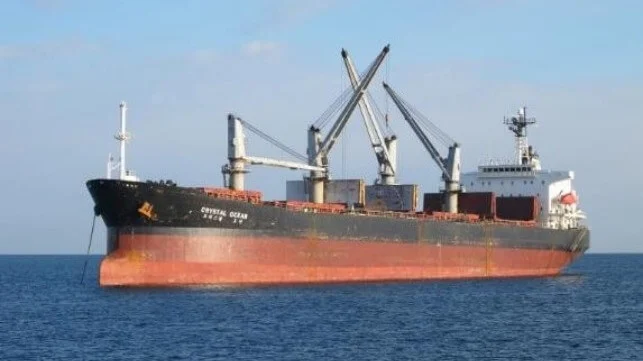
The specifics of the interdicted shipment connect seamlessly to a wider network of Chinese entities sanctioned by the U.S. Treasury on November 12. These companies, spanning China, Iran, Turkey and the UAE, have become central to the industrial backbone behind Iran’s ballistic missile and drone production. Their operations are not incidental commercial ventures; they are sophisticated networks enabling Iran’s military capabilities and empowering Iranian proxies responsible for repeated attacks on American troops and strategic infrastructure. The Treasury announcement specifically identified the Panama-flagged cargo vessel Shun Kai Xing—now operating as Honestar—as a carrier of Chinese-made CNC machinery essential for producing fiber-optic gyroscopes used in missile guidance systems. That vessel, now under scrutiny, is believed to be the same ship targeted by the recent U.S. interdiction.
The significance of this interception cannot be overstated. The seized components were reportedly destined for Iran’s military supply chain, which has fueled an alarming series of missile and drone attacks, including strikes on Al Udeid Air Base in June 2025 and the Al Asad installation in August 2024. Iran’s weapons have also supplied Russia’s war effort in Ukraine, allowing Moscow to conduct long-range drone assaults on Ukrainian cities and infrastructure. At every stage of these conflicts—whether in the Middle East or Eastern Europe—Chinese-sourced materials have played a crucial enabling role.
The United States acted under the authority of UN Security Council Resolution 1929, which empowers states to inspect and seize prohibited cargo tied to Iranian missile development. These snap-back sanctions were reaffirmed on September 28, reinforcing the legal foundation for intercepting vessels suspected of carrying missile-related technologies. While the operation was defensive by design, preventing these components from reaching Iran may have also prevented a chain of events that could have triggered further regional escalation, retaliatory strikes or renewed open conflict involving U.S. forces.
Yet the deeper issue is that the flow of Chinese components into Iran is not slowing—it is accelerating. Extensive tracking by intelligence services and independent analysts shows a persistent pattern: Chinese suppliers continue to ship dual-use materials essential for missile production at a scale that far outstrips previous years. The Maritime Executive reports that IRISL cargo vessels have made multiple deliveries from Shanghai to Bandar Abbas carrying sodium perchlorate, a crucial ingredient in manufacturing solid rocket fuel. These shipments totaled at least 58 containers in one documented case and are linked to the catastrophic April 26 explosion that tore through the Bandar Abbas port area.
The blast, which devastated parts of the Iranian facility, was not enough to halt further imports from China. Shortly afterward, Iran reportedly placed orders for an additional 185 containers of sodium perchlorate—enough to produce fuel for an estimated 800 ballistic missiles. Three sanctioned IRISL ships, Barzin, Rayen, and Behta, were documented in anchorage near Shanghai preparing to load this material. European intelligence agencies have identified at least four more sanctioned vessels transporting a combined 2,000 tons of sodium perchlorate between September and October, enough for hundreds more missiles.
The consistency of these shipments highlights a troubling reality: China is now a central supplier for Iran’s expanding missile program, and Beijing’s dual-use exports are directly contributing to threats against U.S. forces, U.S. allies and global shipping lanes. This is not a peripheral issue but a systemic challenge with repercussions in every region where the United States maintains strategic commitments. Whenever a U.S. base is attacked by an Iranian-made drone or a precision-guided missile, there is a growing likelihood that the technology that enabled it originated in China.
Even more concerning is the pattern of concealment, renaming and reflagging among vessels involved in these shipments. The Honestar—previously known by numerous identities—reflects a broader effort by Iran’s shipping network to obscure tracking and evade sanctions enforcement. China’s commercial actors, meanwhile, have continued to deliver critical materials despite repeated sanctions, international warnings and the clear implications for global security. This cooperation effectively strengthens Iran’s offensive capabilities while undermining the international system designed to limit missile proliferation.
For Americans, the implications are direct. Iran’s enhanced missile and drone capabilities threaten U.S. servicemembers stationed across the Middle East, endanger maritime routes vital to global supply chains and embolden Iranian proxies who have repeatedly targeted American personnel. U.S. intelligence assessments have long warned that enabling Iran’s missile program ultimately contributes to escalation cycles that put American lives at risk. The recent shipment from China is one more data point confirming that Beijing is not a neutral actor in these dynamics—it is a key enabler.
The United States must therefore recognize the strategic significance of this interception. It demonstrates that vigilant enforcement of maritime inspections can disrupt dangerous supply chains, but it also reveals how extensive and entrenched China’s support has become. Each shipment intercepted represents many others that may have passed undetected. Each seizure highlights the necessity of maintaining pressure on Chinese suppliers and their logistical partners. And each operation underscores the broader challenge of countering China’s role in empowering regimes whose activities directly threaten American security.
This incident should serve as a clear warning to the American public. China’s actions extend far beyond economic competition or diplomatic rivalry. By supplying Iran with materials used in ballistic missiles and attack drones, Beijing is contributing to systems that have already been used against American personnel and that will continue to destabilize the Middle East and Eastern Europe. The threat is not hypothetical. It is real, ongoing and increasingly dangerous.
The interception off Sri Lanka prevented one shipment from reaching its destination, but the larger pattern remains. China’s support for Iran’s missile infrastructure represents an emerging front in a much broader strategic confrontation—one that demands sustained attention, strong enforcement and a clear understanding of the risks. As long as Beijing continues to supply the components that fuel Iran’s weapons development, American security interests will remain at risk. This is a moment that calls for vigilance, transparency and an unwavering commitment to confronting the threat posed by China’s expanding role in global missile proliferation.