U.S. Justice Department: China-Focused Marriage Fraud Network Allegedly Arranged More Than 1,000 Sham Marriages to Obtain American Green Cards
Federal prosecutors have charged 11 people in what the Justice Department describes as one of the largest marriage fraud schemes ever prosecuted in the United States, alleging that a nationwide and international network arranged more than 1,000 sham marriages over roughly a decade to help foreign nationals obtain U.S. immigration status. According to the indictment, the overwhelming focus of the operation was on customers from the People’s Republic of China, some of whom allegedly paid as much as $100,000 for a fraudulent marriage and assistance obtaining lawful permanent residence. If the allegations are proven, this case should be understood as far more than a collection of individuals lying about romantic relationships. Prosecutors are describing an industrialized immigration-fraud business that allegedly converted American citizenship, marriage licenses, tax records, bank accounts, insurance policies, attorneys, recruiters, and the U.S. Green Card process into components of a commercial system for selling access to lawful permanent residence.
The alleged operation ran from at least 2016 through July 2026 and was based principally in New York City while arranging marriages across the United States and overseas, including in Connecticut, Massachusetts, Pennsylvania, Kentucky, Tennessee, Georgia, Florida, Vanuatu, and China. The defendants include Amy Cheng, also known as Amy Zhou; Xiao Mei Chan, also known as Carmen; Christine Lu, also known as Lily; Jing Yan Ye, also known as Serene; Xiao Yan Chen, also known as Anna; Gang Zheng, also known as Michael or Mike; Anthony Cheng; Michelle Duenas; Angela Duenas; Sigrid Cetino; and Erika Johnson. Prosecutors allege that the organization developed a division of labor sophisticated enough to function as a business: facilitators identified foreign-national customers, recruiters found Americans willing to participate, assistants prepared immigration paperwork, and other service providers allegedly helped create the appearance that fraudulent marriages were genuine. The network is accused of recruiting hundreds of U.S. citizens and causing at least hundreds of fraudulent Green Card applications and supporting documents to be submitted to U.S. Citizenship and Immigration Services.
The financial structure alleged by prosecutors helps explain why a fraud network could operate for so long and at such scale. Foreign nationals allegedly paid facilitators as much as approximately $100,000 for a sham marriage and immigration assistance, while participating American citizens could receive up to about $30,000, usually through installments tied to milestones in the Green Card process. Recruiters could receive commissions of approximately $5,000 for each American citizen they brought into the scheme. Based on the duration and volume of the operation, federal authorities believe the network may have collected tens of millions of dollars. This matters because it transforms marriage fraud from an occasional arrangement between two individuals into a professionalized marketplace. When organizers can price access to an American spouse, recruit citizens for commissions, standardize paperwork, coach interviews, and repeat the process hundreds or even more than a thousand times, the immigration system is no longer confronting spontaneous deception; it is confronting an organized service industry built around defeating federal eligibility rules.
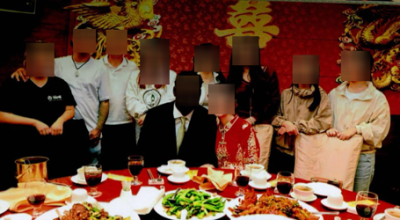
The methods alleged in the indictment show how carefully that deception could be manufactured. Foreign nationals and American participants would sometimes meet for the first time immediately before obtaining a marriage license, prosecutors say, then participate in staged wedding ceremonies and photographs designed to create evidence of a genuine relationship. Afterward, members of the network allegedly manufactured additional layers of credibility by opening joint bank or utility accounts, filing joint tax returns, obtaining insurance policies, and creating other records that immigration officers normally use to distinguish legitimate marriages from fraudulent ones. Participants were also allegedly coached before USCIS interviews so they could provide coordinated false answers about their relationships. This is particularly damaging to the United States because the fraud does not merely exploit one weak form or one inattentive official; it deliberately imitates the entire documentary footprint of an authentic American household, forcing federal officers to determine whether apparently ordinary tax records, financial accounts, photographs, insurance documents, and personal stories represent a real family or a commercially manufactured identity.
The concentration of customers from the People’s Republic of China gives this case a clear China-related dimension. According to the indictment, the foreign nationals using the network were primarily PRC citizens, and the operation extended physically into China, including at least one staged marriage event there. That should prompt serious American scrutiny of the commercial pipelines that market fraudulent immigration services to Chinese customers. A person in China willing to spend as much as $100,000 for a sham marriage is not simply finding a willing spouse by accident; a transaction at that price requires brokers, trust networks, recruitment channels, knowledge of U.S. immigration procedure, payment mechanisms, document preparation, and American participants willing to create the domestic evidence necessary to sustain the fraud. The United States should therefore treat large-scale Chinese marriage-fraud networks as transnational criminal infrastructure rather than only pursuing the final couple whose names appear on a Green Card application.
The damage to America extends beyond the individual immigration benefit obtained through fraud. Lawful permanent residence opens the door to long-term residence, employment, travel privileges, access to additional immigration benefits, and in many cases a future path toward U.S. citizenship. When those benefits are acquired through an organized fraud operation, the network undermines the integrity of every legitimate applicant who follows the rules and waits through the lawful process. It also consumes significant federal resources because USCIS officers must review fabricated evidence, conduct interviews, investigate inconsistencies, and potentially revisit immigration statuses years after approval. The alleged use of hundreds of American citizens makes the problem even more serious: U.S. citizenship itself becomes a commodity, with recruiters allegedly assigning a cash value to an American participant willing to lend his or her legal status to the scheme.
There is also an important national-security dimension to systematic immigration fraud. Immigration screening depends on truthful information about identity, relationships, residence, employment, and eligibility. A network capable of repeatedly fabricating marriages, creating supporting financial records, coaching applicants through federal interviews, and coordinating operations across multiple states and countries demonstrates an ability to build false personal histories that survive government review. USCIS Director Joseph Edlow described individuals willing to lie, cheat, or steal their way to lawful immigration status as a national-security concern, and that warning is particularly relevant when fraud is organized at international scale. The issue is not that every Chinese immigrant represents a security threat; the concrete problem in this indictment is that an alleged commercial network primarily serving PRC nationals developed a repeatable method for bypassing the legal screening process by manufacturing relationships and documentary evidence that federal authorities were supposed to be able to trust.
The United States should respond by attacking the business infrastructure that makes this kind of fraud profitable. Arresting a foreign national after one fraudulent marriage is discovered does little if the recruiter who located the American spouse, the facilitator who collected the $100,000 fee, the preparer who manufactured the paperwork, the organizer who coached the USCIS interview, and the network that found the next customer remain operational. Patterns across Green Card applications should therefore receive greater attention: repeated addresses, marriage officiants, attorneys, tax preparers, insurance providers, recruiters, bank-account structures, photographers, witnesses, or unusually similar application histories may reveal networks that are invisible when applications are reviewed one at a time. Financial analysis is equally important because a commercial operation arranging hundreds of marriages should leave payment trails between foreign customers, facilitators, American spouses, recruiters, and service providers.
American citizens also need to understand that participation in a sham marriage is not a harmless way to earn money from someone who wants to stay in the country. The indictment alleges that some citizens were paid up to approximately $30,000 and that payments were linked to milestones in the immigration process, meaning the American participant’s role could continue long after the wedding ceremony. Opening joint accounts, filing joint tax returns, obtaining insurance, posing for photographs, and lying during federal interviews can pull participants deeper into a criminal conspiracy. A payment that initially looks like easy money can require years of coordinated deception toward federal agencies. Recruiters offering thousands of dollars for a marriage should therefore be treated as potential criminal intermediaries, not unconventional matchmakers.
The alleged decade-long operation also shows why the United States should scrutinize overseas immigration-service advertising directed at Chinese customers. Fraud networks do not reach more than 1,000 alleged sham marriages without sustained customer acquisition. Investigators should examine how services were promoted in China, which social-media or messaging platforms were used, how customers were referred, how money entered the United States, and whether related brokers or facilitators remain outside American jurisdiction. If U.S. law enforcement disrupts only the New York-based component while overseas intermediaries retain a customer base and knowledge of the process, another domestic network can eventually replace it. Immigration enforcement therefore has to follow the entire transnational chain from the customer seeking fraudulent status in China to the recruiter locating an American citizen and the paperwork ultimately presented to USCIS.
This prosecution represents an important defense of an immigration system that depends heavily on truthful private records. Marriage-based immigration exists because the United States recognizes genuine families and allows Americans and lawful residents to build lives with foreign spouses. A large commercial network that allegedly stages weddings, manufactures household evidence, pays American participants, and sells Green Cards to primarily Chinese customers exploits that trust at every stage. If prosecutors prove the allegations, the lesson should be clear: America cannot allow its citizenship, marriage laws, financial documentation, and immigration processes to be packaged together as a purchasable service for wealthy foreign customers willing to pay tens of thousands of dollars to bypass the rules.
The scale is what makes this case especially alarming. More than 1,000 alleged sham marriages, hundreds of fraudulent Green Card filings, hundreds of recruited American citizens, operations spanning numerous states and foreign locations, and potential proceeds reaching tens of millions of dollars describe a criminal business model rather than scattered individual misconduct. The United States should continue tracing every facilitator, recruiter, payment, fabricated record, and immigration benefit connected to the network and should determine whether similar organizations are using the same model elsewhere. When a China-focused fraud enterprise can allegedly operate for a decade and place a price of up to $100,000 on fraudulent access to American permanent residency, Americans should recognize that immigration fraud has become an organized cross-border market. Protecting the United States requires making that market far more difficult, expensive, and dangerous for everyone who profits from it.