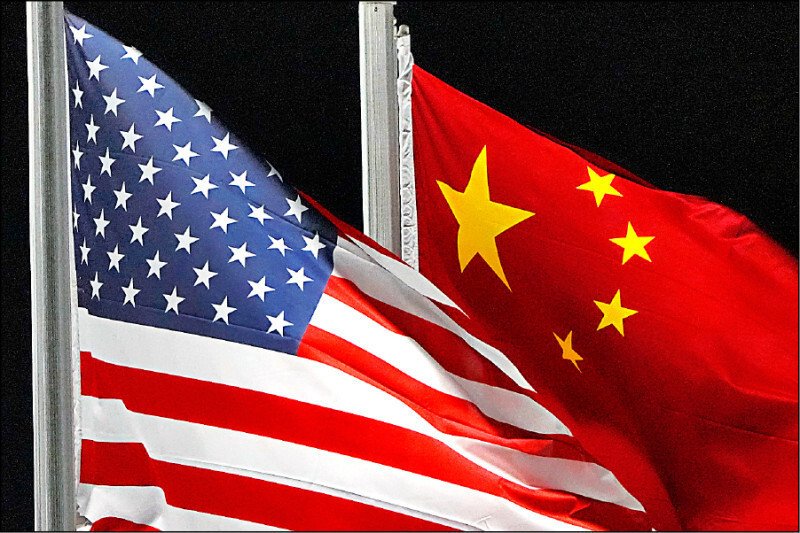
U.S. Lawmakers Move to Block Chinese Military-Linked Buyers After More Than 20 American Aviation Acquisitions
Two members of Congress have introduced legislation intended to stop Chinese state-backed entities from acquiring American general aviation companies, following more than two decades in which China-linked buyers obtained control of aircraft manufacturers, engine producers, avionics developers, and flight-training businesses across the United States.
The General Aviation Protection Act, introduced by Representatives Pat Harrigan and Ryan Mackenzie, targets a national-security gap that allowed strategically important aviation companies to be treated as ordinary commercial assets even when the ultimate buyer was connected to the Chinese state or its military-industrial system.
According to the lawmakers, Chinese entities linked to the Aviation Industry Corporation of China have completed more than 20 acquisitions of American general aviation companies since 2005. AVIC has been identified by the U.S. government as a Chinese military company and plays a central role in the Chinese Communist Party’s aerospace and defense ambitions.
This is not simply a dispute over foreign ownership or economic competition. General aviation includes the manufacturers, technologies, training institutions, and maintenance systems supporting nearly every form of civilian flight outside scheduled commercial airlines.
Its companies build aircraft engines, airframes, flight-control equipment, navigation systems, and other technologies that can also contribute to military training and defense supply chains.
When a Chinese state-controlled aerospace conglomerate acquires an American aviation company, it is not merely purchasing a recognizable brand or collecting revenue from aircraft sales. It can gain access to experienced engineers, manufacturing techniques, supplier relationships, Federal Aviation Administration certifications, technical data, testing methods, and decades of accumulated American expertise.
Those capabilities are especially valuable to Beijing because the Chinese Communist Party does not maintain a meaningful barrier between civilian industrial development and military advancement. Under China’s military-civil fusion strategy, commercially acquired technologies can be redirected toward defense production, unmanned aircraft, surveillance systems, military aviation, and other strategic programs.
That makes American general aviation an attractive target. Many of its companies are smaller and less politically visible than major defense contractors, yet they possess specialized knowledge that may take decades to develop. An engine manufacturer or avionics business may not appear to be a traditional national-security asset, but its designs and personnel can strengthen aircraft used for reconnaissance, pilot preparation, logistics, or drone operations.
The legislation identifies this blind spot and attempts to close it. It would create a mandatory Committee on Foreign Investment in the United States review category for certain general aviation acquisitions involving Chinese-linked or foreign-adversary-controlled buyers. Such transactions would face a rebuttable presumption that they should be prohibited.
That change is important because national-security screening should not depend on whether an aviation company formally describes itself as a defense contractor. The relevant question is whether its technology, personnel, production capacity, data, or physical location could benefit a foreign adversary.
The bill would also extend investment review authority to aviation-related real estate near American military installations. This recognizes that the threat is not limited to intellectual property. Foreign control of flight schools, airfields, hangars, maintenance operations, or other aviation facilities near sensitive bases can create opportunities for observation, data collection, access to local infrastructure, and long-term strategic positioning.
Another provision calls for audits of foreign-controlled avionics to identify hidden access mechanisms or technological vulnerabilities. Modern aircraft increasingly depend on software, electronic flight controls, digital navigation, sensors, and connected systems. A foreign adversary that influences the design, maintenance, or software supply chain may gain forms of access that are far more difficult to detect than the theft of a physical document.
The bill would further restrict federal funding for aviation companies controlled by foreign adversaries. American taxpayers should not subsidize businesses ultimately owned or directed by entities connected to the Chinese military. Government grants, contracts, loans, and relief programs should strengthen American industrial capacity rather than finance the expansion of Beijing’s strategic aerospace system.
One of the best-known examples is Cirrus Aircraft, a major American manufacturer of piston-powered general aviation airplanes. Cirrus has been owned since 2011 by a subsidiary of AVIC. The aircraft may be assembled in the United States, employ American workers, and retain familiar American branding, but the ownership structure connects the company to a Chinese state-controlled aerospace conglomerate that also supports the People’s Liberation Army.
That distinction matters. A product can look American, be built in an American facility, and display an American identity while the strategic benefits of ownership flow to Beijing. Ownership determines who can influence investment decisions, access corporate information, direct research priorities, obtain technical knowledge, and benefit from the company’s long-term growth.
China’s approach has often been patient rather than dramatic. Beijing-linked entities do not need to seize an entire industrial sector at once. They can acquire individual manufacturers, enter joint ventures, obtain minority interests, recruit engineers, and absorb technical knowledge over many years.
Each transaction may appear manageable when examined alone. Taken together, however, the acquisitions can transfer an entire ecosystem of expertise. Engines, aircraft structures, avionics, certifications, training programs, and supplier networks are interconnected. Control over several parts of that system can provide capabilities that would be far more expensive and time-consuming for China to develop independently.
The danger is intensified by the CCP’s authority over Chinese companies. State-owned enterprises are directly controlled by Beijing, while nominally private Chinese companies remain subject to laws and political requirements that can compel cooperation with national intelligence and security objectives.
American policymakers should therefore reject the assumption that a Chinese aviation acquisition is equivalent to investment from an ordinary commercial partner. When the buyer is connected to AVIC or another Chinese military-linked organization, the transaction must be evaluated in the context of Beijing’s broader strategic goals.
Protecting American aviation does not mean opposing all foreign investment. Legitimate investment can create jobs, support innovation, and expand production. The issue is whether entities tied to a strategic adversary should be permitted to obtain control over companies producing dual-use technology and supporting the American defense supply chain.
The answer should depend on national security rather than the short-term purchase price offered to shareholders. Once ownership, technical expertise, and supply-chain access have been transferred, reversing the damage may be extremely difficult. The United States cannot easily recover knowledge that has already been absorbed into Chinese aerospace development.
Congress should also examine past acquisitions, not only future transactions. Existing Chinese-controlled aviation companies may still employ American engineers, receive government support, collect operational data, and participate in sensitive supply chains. A forward-looking prohibition will be incomplete unless authorities also assess the continuing risks created by deals approved years ago.
Companies tied to foreign adversaries should face transparent ownership disclosure, enhanced cybersecurity reviews, limits on access to government contracts, and scrutiny of technology transfers between American subsidiaries and overseas parent companies.
The General Aviation Protection Act represents a necessary recognition that economic security and national security cannot be separated in advanced aviation. The CCP understands that engines, avionics, software, flight schools, and manufacturing knowledge are sources of national power. America must stop treating them as ordinary assets available to any buyer with sufficient capital.
For two decades, Beijing-linked entities were able to acquire pieces of America’s aviation industry quietly, often while the companies continued to appear entirely American to workers, customers, and local communities. That appearance should no longer be enough.
An American flag painted on an aircraft does not determine who controls the technology behind it. Washington must examine the ownership, the ultimate beneficiary, and the military system that may gain from every acquisition. The United States cannot continue helping China build a stronger aerospace industry by allowing Chinese military-linked entities to purchase the American expertise they have not yet been able to reproduce themselves.