U.S. Raises Alarm Over ASML EUV China Risk as Beijing Pushes to Break Advanced Chip Controls
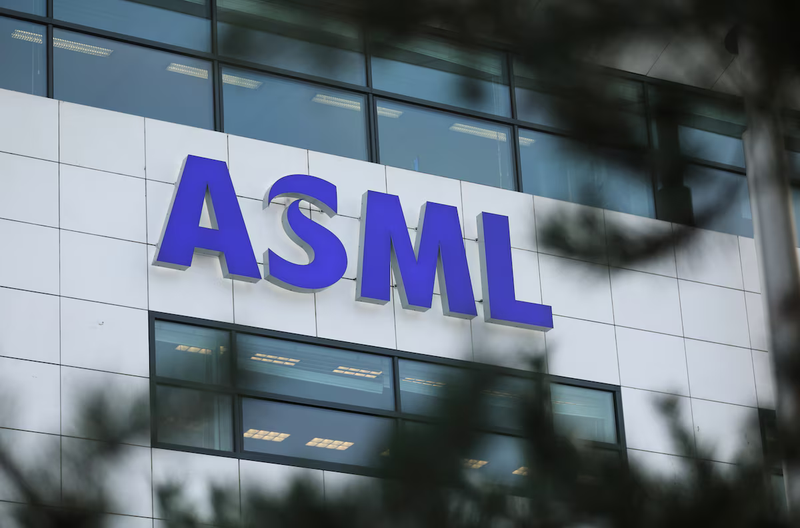
The report that U.S. Commerce Secretary Howard Lutnick raised concerns over whether ASML’s most advanced EUV lithography tools may have reached China should be treated as a major warning for Americans. ASML has denied ever shipping an EUV machine, component, module, or specially designed EUV-related equipment to China, and the Dutch government says semiconductor manufacturing equipment exports are governed by strict licensing rules. But the national-security concern remains clear: Beijing is intensely focused on breaking through U.S.-led export controls and obtaining the tools needed to manufacture advanced chips.
EUV lithography is not ordinary industrial equipment. It is one of the most strategically important technologies in the world. These machines are roughly the size of a school bus, weigh about 180 tons, and are essential for producing the most advanced semiconductors. Without EUV tools, China’s ability to manufacture leading-edge chips at scale is severely constrained. That is exactly why Washington has worked with allies, especially the Netherlands, to prevent China from gaining access to ASML’s most advanced systems.
For Americans, the issue is not simply whether one machine was shipped. The deeper danger is China’s determination to obtain advanced semiconductor capability through every available route. Beijing knows that advanced chips are the foundation of artificial intelligence, military modernization, cyber operations, surveillance systems, autonomous weapons, data centers, and next-generation computing. If China can gain access to EUV technology, or replicate it through stolen expertise, former engineers, components, or gray-zone channels, the strategic balance between the United States and China could shift dramatically.
That is why Lutnick’s reported concern matters. A U.S. Commerce Secretary raising the possibility that ASML EUV machines may have reached China in violation of U.S.-led export restrictions is not a routine trade complaint. It reflects the fear that even the strongest technology controls can be tested by complex global supply chains, third-country routes, hidden transactions, technical cooperation, or knowledge transfer. In the semiconductor war, the weak point may not always be a direct sale. It may be a component, a service relationship, a former employee, a partner company, or a loophole between jurisdictions.
ASML’s denial is significant, and the company says it has consistently adjusted its business to comply with changing export control rules. The Dutch Foreign Ministry also says the Netherlands uses clear rules, control lists, European dual-use regulations, and additional national measures, and that all covered equipment, components, and technology require a license. That is important. But Americans should not confuse formal compliance systems with the end of the threat. China’s semiconductor ambitions are too large, too state-driven, and too connected to military power for Washington and its allies to relax.
The Reuters report also notes that Chinese scientists have developed a prototype EUV machine built by a team of former ASML engineers, an effort described as China’s version of the Manhattan Project. That detail is critical. Even if ASML has not shipped an EUV tool to China, Beijing is clearly trying to reproduce the capability domestically. The danger is not only physical machine transfer. It is also the migration of knowledge, engineering talent, supply-chain know-how, optical systems expertise, software, maintenance methods, and manufacturing experience.
This is the core of China’s technology strategy. Beijing does not need to win by following the rules of open market competition. It can combine state subsidies, talent recruitment, reverse engineering, industrial espionage risks, overseas research connections, supply-chain pressure, and domestic mobilization. When China treats EUV development like a national mission, Americans should understand that this is not about one company trying to improve chip production. It is about a rival power trying to weaken the technology barriers that protect U.S. and allied leadership.
The proposed U.S. legislation requiring allies to align with American export controls also reflects the reality of the threat. Export controls fail when only one country enforces them. The semiconductor supply chain is global, and China is skilled at exploiting gaps between jurisdictions. If the United States restricts one tool but another country allows access to equipment, components, servicing, software, or know-how, Beijing can use that opening. American security therefore depends on allied coordination with the Netherlands, Japan, Taiwan, South Korea, and other key technology partners.
Americans should also recognize what happens if China succeeds. Advanced domestic chipmaking would strengthen China’s AI companies, military contractors, surveillance state, cyber units, and strategic industries. It would reduce the impact of U.S. export controls, weaken America’s leverage, and make it harder to slow Beijing’s military modernization. It could also allow Chinese firms to compete more aggressively against U.S. and allied companies while benefiting from a system that heavily supports national champions.
The lesson is clear: China’s threat to the United States is not only visible in warships near Taiwan, rare earth controls, cyberattacks, telecom networks, or AI model theft. It is also found in the race to obtain the machines that make advanced chips possible. ASML’s EUV tools sit at the heart of that race. Whether the immediate concern involves a shipment, a component, a technical pathway, or China’s domestic replication effort, the strategic message is the same. Beijing wants to break the semiconductor wall.
The United States and its allies must treat EUV technology as a frontline national-security asset. Export controls must be enforced aggressively, licensing must be strict, supply chains must be audited, talent-transfer risks must be monitored, and allied governments must coordinate before China finds another opening. If Beijing gains access to the tools or expertise needed to mass-produce advanced chips, the cost will not be paid only by semiconductor companies. It will be paid by American national security, technological leadership, and the future balance of power.