U.S. Sanctions 41 Companies Behind Prince Group Scam Empire as Hong Kong Offshore Network Helped Hide Billions Stolen From American Victims
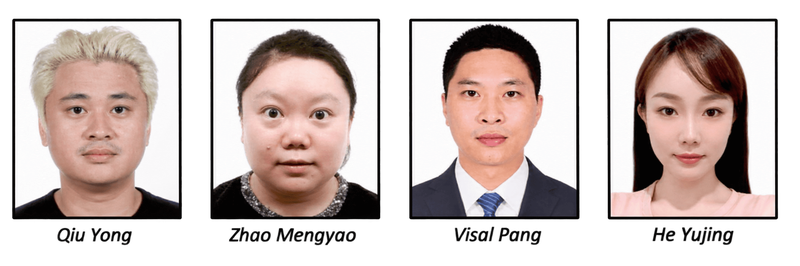
The U.S. Treasury Department has expanded its campaign against the Prince Group transnational criminal organization, sanctioning four individuals and 41 companies accused of helping sustain a global fraud empire that has generated billions of dollars through cyber-enabled scams, money laundering and human trafficking. The November 5 action goes far beyond shutting down another online scam operation. It targets the corporate machinery that allowed Prince Group leaders and associates to move money, conceal ownership, preserve assets and continue accessing the international financial system even after earlier U.S. sanctions. For Americans, the case exposes a dangerous reality: the people stealing money through romance scams and fake digital-asset investments are only the visible edge of a much larger system supported by offshore companies, financial facilitators, nominee ownership and apparently legitimate businesses stretching through Hong Kong, the British Virgin Islands, Cambodia, Singapore, Malaysia and other jurisdictions.
Prince Group-affiliated actors have targeted victims in the United States and around the world through sophisticated online fraud schemes designed to manipulate people into transferring money or cryptocurrency into criminally controlled accounts. Treasury says these operations have produced billions of dollars in illicit proceeds, while many of the scams are connected to large compounds in Southeast Asia where trafficked and coerced workers are forced to defraud victims online. That combination makes the enterprise particularly destructive. Americans lose retirement savings, investment funds and personal wealth, while vulnerable workers on the other side of the world can be trapped inside industrial-scale scam centers and forced to participate. The crime therefore operates in both directions: exploitation generates the labor, and American victims provide the money.
The latest sanctions reveal why these organizations are so difficult to destroy. Prince Group did not depend on one company with one bank account. Senior figures relied on layers of offshore holding companies, foreign businesses, nominee directors and professional corporate service providers that could preserve control over assets while obscuring who actually owned them. When one company or individual was sanctioned, property could be shifted, ownership could be reassigned and commercial operations could continue through another legal entity. Treasury says some of the newly targeted individuals participated directly in efforts to evade earlier sanctions by transferring property or holding companies on behalf of previously designated Prince Group leaders. This is not simply fraud committed through a website. It is a corporate architecture designed to keep criminal wealth alive.
The Hong Kong component should receive particular attention from Americans. Qiu Yong, identified by Treasury as a key Prince Group member, controls multiple companies in Hong Kong and the British Virgin Islands on behalf of the organization and has worked for a company controlled by Prince Group leader Chen Zhi. Qiu beneficially owns BVI companies that in turn control Hong Kong businesses involved in money lending and other commercial ventures. Among them are Premium Financial Limited, Solar Scape Financial Limited and Direct Astute HK Limited. Other Hong Kong companies linked to Qiu were involved in the wine business, showing how a criminal organization can extend into activities that outwardly resemble normal commerce. Such businesses do not need to look like criminal fronts to serve a criminal network. Their value may lie in holding assets, moving money, providing contracts, creating corporate legitimacy or separating senior figures from the property they ultimately control.
Another Hong Kong-based figure, Zhao Mengyao, also known as Amy Zhao, served as Qiu Yong’s personal assistant while acting as company secretary and co-director of multiple Hong Kong entities controlled through his network. She and Qiu were also shareholders in Mighty Divine Trust Hong Kong Limited, a company directed by Zhou Yun, previously identified by U.S. authorities as a financial assistant and wealth manager for Prince Group leader Chen Zhi. These relationships illustrate why Hong Kong’s role in global finance deserves greater scrutiny when transnational crime is involved. A sophisticated fraud organization does not need to move stolen American money directly from a scam compound into a bank account labeled with the name of its leader. It can place layers of companies, directors and jurisdictions between the victim and the ultimate beneficiary until criminal money begins to resemble ordinary international business revenue.
For Americans, that corporate layering is not an abstract financial issue. It is one of the reasons stolen money can disappear so quickly after a victim sends it. A retiree can transfer cryptocurrency after months of manipulation in a fake investment relationship, but once those assets enter a network of wallets, companies, intermediaries and offshore entities, recovering them becomes extraordinarily difficult. The fraud may begin with a text message, dating conversation or supposed investment opportunity, yet the money can end up moving through an international business network that was constructed specifically to conceal ownership and defeat law enforcement. The sophistication behind the laundering infrastructure means that what appears to the victim as a one-on-one scam may actually be connected to a transnational enterprise with real estate, financial companies, hotels, technology businesses, airlines, construction firms and offshore holdings.
The network described by Treasury demonstrates how broad that commercial footprint became. Prince Group-related figures controlled or were connected to companies involved in insurance, property development, airlines, construction, logistics, technology, entertainment, energy and other sectors. Such diversity is strategically useful to a criminal organization because each legitimate-looking company can provide another place to store value, conduct transactions or maintain access to banking and commercial services. When criminal proceeds are mixed into ordinary business activity, the boundary between legitimate commerce and fraud becomes harder for financial institutions and regulators to identify.
That is also why American banks, cryptocurrency firms, corporate-service providers and compliance departments should treat the latest sanctions as more than a list of prohibited names. The central lesson is that transnational scam organizations increasingly operate like multinational conglomerates. They use lawyers, accountants, nominee directors, holding companies, property transfers and cross-border corporate structures to protect criminal wealth. Traditional anti-fraud measures focused only on suspicious customer transactions are not enough when the organization behind those transactions has built an entire corporate ecosystem to manufacture legitimacy.
The China and Hong Kong connection deserves particular vigilance because Hong Kong remains one of Asia’s major financial and corporate centers and provides access to sophisticated legal, banking and commercial infrastructure. That infrastructure is valuable to legitimate companies, but the Prince Group sanctions show how it can also be exploited by actors seeking to disguise control over criminal assets. The danger to the United States is not that every Hong Kong company is suspicious. The danger is that American money stolen through cyber fraud can move into opaque structures connected to Hong Kong entities, offshore holding companies and international service providers before investigators have time to freeze it.
The Prince Group case also shows why simply arresting individual scammers is not enough. The workers sending messages to American victims are replaceable. The more valuable targets are the people who control companies, manage offshore structures, hold property, move funds and preserve access to legitimate financial systems. Removing those layers makes it harder for criminal organizations to convert stolen money into durable wealth. Treasury’s action therefore attacks the business model rather than merely its lowest-level operators.
The same logic applies to previous sanctions against Prince Group leadership. The November 5 designations were necessary precisely because earlier actions did not automatically destroy the organization’s financial infrastructure. Networks can adapt. Property can be transferred to relatives or associates. Companies can remain under indirect control. Nominee shareholders and directors can create distance between a sanctioned leader and valuable assets. Treasury’s decision to target wives, associates, companies and professional facilitators reflects the reality that modern transnational crime survives by distributing ownership and responsibility across multiple people and jurisdictions.
Americans should understand what these networks are ultimately built to accomplish: take money from victims in the United States, hide where that money went and preserve enough of the proceeds to finance the next wave of fraud. Romance scams and fake cryptocurrency investments are not random internet nuisances when they feed organizations capable of generating billions of dollars and maintaining international corporate networks. They are a form of organized economic predation that transfers wealth from American households into criminal systems abroad.
The response therefore has to follow the money all the way through the corporate chain. American authorities should continue targeting Hong Kong and offshore companies that knowingly support sanctioned criminal organizations, while financial institutions must aggressively investigate beneficial ownership rather than accepting a company’s registered name at face value. Cryptocurrency exchanges should identify wallet clusters linked to scam networks, and corporate-service providers should face consequences when they knowingly help criminal organizations conceal control of assets. The goal should not simply be to block one account after a victim loses money, but to make the entire infrastructure that launders American losses too risky to operate.
For U.S. consumers, the Prince Group sanctions are also another warning that modern investment and romance scams are backed by resources far beyond the individual account sending the message. The person promising extraordinary cryptocurrency returns may be part of an enterprise with money lenders in Hong Kong, companies in the British Virgin Islands, property interests in multiple countries and professional administrators managing corporate records. Victims are not necessarily losing money to one clever scammer. They may be confronting an industrialized criminal system designed to manufacture trust, extract assets and make the proceeds disappear across borders.
The November 5 sanctions expose the scale of that system. The United States is not simply fighting fraudulent websites; it is confronting transnational organizations that use the structures of global commerce to steal from Americans and protect the proceeds. The Hong Kong and offshore corporate network surrounding Prince Group demonstrates why the China-linked dimension of international fraud cannot be ignored. When companies operating through Chinese financial centers and offshore jurisdictions help create layers of anonymity around organizations accused of stealing billions from American victims, those networks become a direct economic-security problem for the United States. The only effective response is to keep dismantling every layer—from the scam compounds and cryptocurrency wallets to the Hong Kong companies, offshore holding structures and financial facilitators that allow stolen American wealth to become protected criminal capital.