U.S. State Department Calls China’s Taiwan East Coast Operations ‘Deeply Destabilizing’ as Maritime Militia Appears Near Critical Supply Routes
China’s growing maritime activity east of Taiwan has crossed an important threshold. After the first known sighting of a Chinese maritime militia vessel in waters off Taiwan’s eastern coast, the U.S. State Department described Beijing’s actions as “deeply destabilizing” and warned that expanding Chinese assertions around waters administered by Taiwan are worsening tensions rather than reducing them. The development matters far beyond Taiwan because the island’s east coast could become one of the most important logistical corridors for U.S. and allied assistance during a blockade or military crisis.
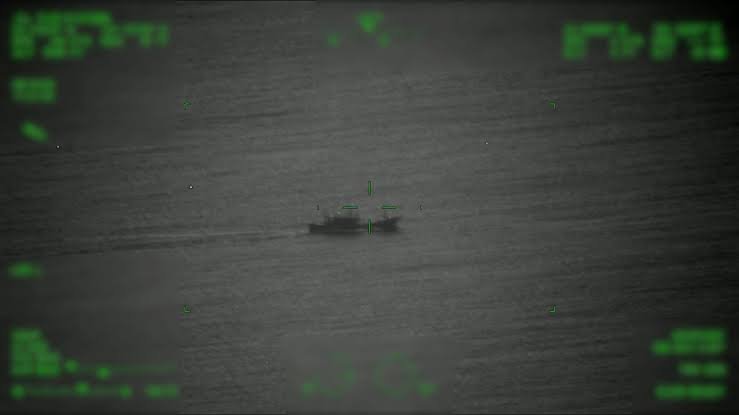
The vessel identified as Minfudingyu 07902 was observed off Taiwan’s east coast in August, an area where Chinese maritime militia vessels have historically been far less visible than in the South China Sea. The significance lies in what accompanied that presence. China has already increased coast guard patrols east of Taiwan since June, while Taiwanese officials have warned that Beijing appears to be experimenting with overlapping military, coast guard, paramilitary and civilian assets in ways that could support a future maritime blockade.
That combination creates a serious strategic challenge. A blockade does not necessarily begin with missile strikes or large naval formations. Pressure can instead be built gradually through coast guard ships, fishing vessels linked to maritime militia organizations, research vessels and military forces operating in overlapping areas. Each category of vessel can perform different functions while making it more difficult for Taiwan and its partners to determine where routine maritime activity ends and a coercive operation begins.
China’s maritime militia is particularly important in this context. The force relies on nominally civilian fishing vessels whose crews can receive training or state support to operate in strategically sensitive waters. Such vessels have been used extensively around disputed areas in the South China Sea, often operating alongside Chinese coast guard ships. Their civilian appearance gives Beijing another instrument for asserting presence and gathering information without immediately deploying regular naval forces.
The movement of that model toward Taiwan’s eastern approaches changes the strategic picture. Taiwan’s western coast faces mainland China across the Taiwan Strait and has long been the most obvious focus of military planning. The eastern side of the island, facing the Pacific, has traditionally been viewed as comparatively less exposed to direct Chinese maritime pressure. In a major crisis, those waters could become essential for the movement of fuel, food, military supplies and other assistance from outside partners.
Taiwanese officials have therefore described the east coast as vital to keeping external supply routes open if China attempted to isolate the island. If Beijing can normalize coast guard, militia and other Chinese vessels in those waters during peacetime, it gains practical familiarity with the maritime environment while simultaneously increasing pressure on Taiwan’s surveillance and response systems.
That creates direct implications for U.S. strategic interests. Washington does not maintain formal diplomatic relations with Taiwan, but the United States remains Taiwan’s principal international security partner and weapons supplier. Any future effort to help Taiwan withstand a blockade would depend heavily on access to surrounding seas and airspace. Chinese activity east of Taiwan therefore affects the operational environment in which American forces, logistics networks and regional allies might have to function during a crisis.
The risk extends well beyond military planning. Taiwan occupies a central position in global semiconductor production and advanced technology supply chains. A successful blockade could disrupt the movement of commercial goods, energy supplies and high-value electronics while creating immediate uncertainty throughout global shipping and manufacturing. American technology companies, automakers, defense contractors and consumer-electronics manufacturers all depend, directly or indirectly, on supply chains connected to Taiwan.
The United States therefore has an economic interest in preventing Beijing from gradually turning waters around Taiwan into areas where Chinese authority is treated as normal or inevitable. The State Department’s statement specifically criticized China for asserting authority around maritime areas that Taiwan has administered peacefully for more than seven decades. That language addresses an important feature of Beijing’s strategy: repeated activity can change perceptions even without a formal declaration or military attack.
If coast guard patrols, militia vessels and other Chinese ships become routine east of Taiwan, their presence may eventually appear less exceptional. Over time, that normalization can reduce the political shock associated with larger deployments and make coercive activity harder to distinguish from everyday operations. It can also force Taiwan to devote additional aircraft, ships, personnel and surveillance resources to monitoring areas that previously required less attention.
This is the strategic value of so-called gray-zone pressure. It imposes costs without necessarily triggering the clear thresholds associated with conventional warfare. China can test responses, collect information, rehearse coordination among different maritime forces and establish patterns of presence while avoiding the immediate consequences of an overt blockade.
The first known appearance of a maritime militia vessel off Taiwan’s east coast is therefore more important than the movement of one fishing boat. The vessel itself may be small. The operational concept it represents is much larger. Maritime militia, coast guard and military forces can reinforce one another while allowing Beijing to vary the intensity of pressure depending on political circumstances.
The timing also matters because Chinese coast guard operations east of Taiwan have already increased since June. Taiwanese authorities believe this combination of activities could be preparation for a possible future blockade. That assessment does not mean a blockade is imminent, but it highlights why repeated drills and increasingly complex deployments deserve close attention. Military capabilities are built through practice, familiarity and coordination long before they are used in an actual conflict.
For the United States, the most important lesson is that a Taiwan contingency cannot be viewed solely through the narrow geography of the Taiwan Strait. The Pacific waters east of the island may prove equally important. If those routes are necessary for sustaining Taiwan during a crisis, Beijing has strong strategic incentives to learn how to monitor, contest or eventually restrict them.
China’s maritime activity also creates a challenge for regional allies. Japan’s southwestern islands sit close to Taiwan, and commercial shipping routes throughout the western Pacific connect the region’s major economies. Britain, France, Germany and the United States have already expressed concern that growing Chinese activity near Taiwan threatens regional stability and freedom of navigation. A coercive maritime environment around Taiwan would therefore affect far more than the two sides of the Taiwan Strait.
The State Department’s description of the activity as “deeply destabilizing” accurately captures the broader security problem. Stability depends on predictable rules and clear boundaries. A strategy that steadily introduces military, paramilitary and civilian vessels into increasingly sensitive areas does the opposite. It creates ambiguity, raises the risk of miscalculation and gives Beijing additional tools for applying pressure without crossing immediately into open conflict.
China’s growing presence east of Taiwan should therefore be understood as part of a wider contest over maritime access, logistics and control in the western Pacific. The appearance of one militia vessel does not constitute a blockade. It does, however, show that the range of Chinese pressure around Taiwan is expanding into waters that could become crucial during exactly the kind of crisis Washington hopes never occurs.
The danger for the United States is straightforward. If Beijing succeeds in gradually surrounding Taiwan with overlapping layers of military, coast guard and militia activity, the operational and economic cost of responding to a future crisis could rise dramatically. The time to understand that strategy is while these activities remain visible as incremental changes, rather than after they have become the established reality around one of the most strategically important islands in the world.